
The NFL just watched Seattle win Super Bowl LX 29-13 with defense and a run game doing most of the talking, and then the league immediately sprinted back to quarterback shopping like it forgot the whole lesson on the ride home. If you need a QB in the 2026 offseason, you’re not “finding your guy,” you’re fighting over leftovers, and that’s exactly why trades are about to run this carousel.
2026 NFL quarterback carousel: the calendar and the cap are forcing trades
The 2026 cap is projected between $301.2 million and $305.7 million per team, so yes, the number looks huge.
But most teams already spent that money in their heads two offseasons ago, which means this isn’t “new money,” it’s “new excuses.” What matters more is that the league year hits like a brick wall. The tag window runs Feb. 17 through March 3, then March 11 at 4 p.m. ET the new league year starts and the trading period opens. That’s not a nice, slow ramp. That’s a short fuse, and teams have to pick a quarterback plan before they’ve got perfect information.
That urgency is why the NFL QB trades 2026 conversation is already louder than usual. When you’re staring at cap compliance, tag decisions, and a draft plan all at once, you don’t want to be the team waiting for a free agent to bless you with an answer. You want control. Trades are how you buy control.
NFL quarterback market 2026: free agency looks like a trap
Fans love free agency because it feels simple. Sign a guy, win a press conference, talk yourself into “stability.” The problem is this year’s “stability” options are the type of names that get you through September and then get you blamed in November.
ESPN’s own offseason framing is blunt about it: the top pending free agents being talked about are more “bridge” than “franchise,” and the market is thin enough that average is going to get paid like special.
That’s how teams end up in the worst place in football, which is not “bad enough to draft a savior,” not “good enough to scare anybody,” just stuck. And if your team is stuck, you don’t want to pay top dollar for the privilege of staying stuck.
Free agency also turns quarterback into a bidding war. Bidding wars make desperate teams do dumb things. Trades at least let you pick a target, structure the money, and negotiate the cost instead of getting dragged into a public auction.
2026 NFL draft quarterback strategy: hope is not a plan
The draft is still the dream because it’s the clean story. Rookie contract, fresh start, new era. But the NFL keeps pretending rookie timelines don’t exist, and that’s how you ruin quarterbacks.
Right now, the Raiders sitting on the No. 1 pick is the giant neon sign for this whole offseason. Geno Smith is already being treated like a move-on situation, and Fernando Mendoza is being treated like the presumptive top pick.
Even if your team loves a rookie, you still need protection, a real run game, and an environment that doesn’t turn every third-and-9 into a survival drill. One bad line and one bad coordinator marriage and your “new era” turns into a mess in under a year.
That’s why the bridge quarterback meaning matters again. A bridge QB is not “the answer.” He’s the guy who keeps your season from dying while you draft, develop, or wait out the next real opportunity. The league hates admitting it, but half the teams are shopping for temporary competence every year now, and 2026 is the kind of offseason that makes that market explode.
2026 NFL QB trade rumors: the big-money situations that make real sense
I’m not doing fake insider talk. I’m not “hearing things.” I’m looking at contracts, guarantees, deadlines, and the way teams act when they’re boxed in.
Here are the quarterbacks who actually make sense as trade candidates in 2026.
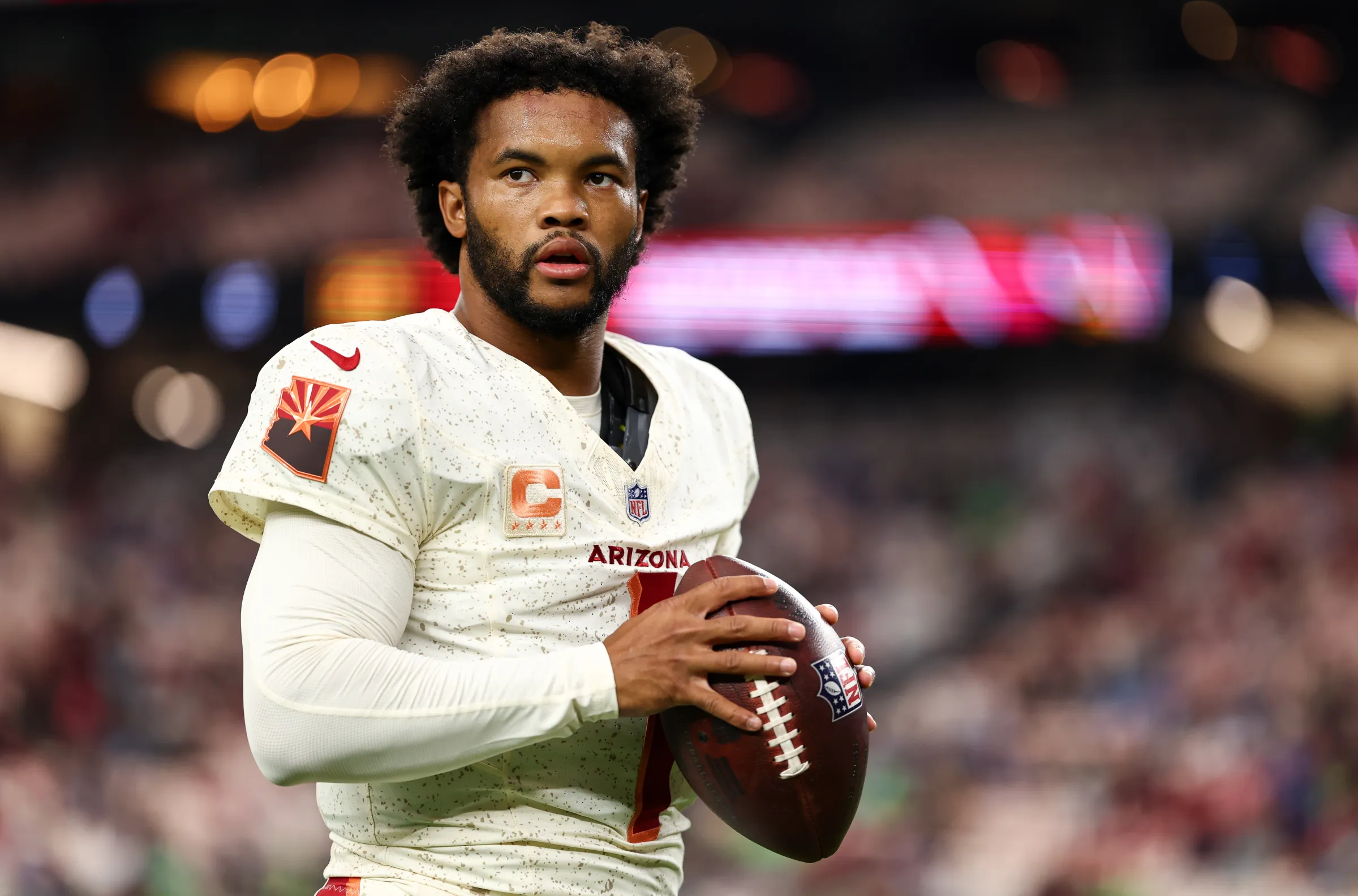
Kyler Murray trade candidate 2026: the contract math is the headline
Kyler is the cleanest “trade makes more sense than a cut” quarterback on the board. ESPN reported Arizona would like to find a trade partner, and the financials are the whole story: Kyler has $36.8 million guaranteed in 2026, and more of his 2027 money becomes guaranteed on March 15 if he’s still on the roster.
Arizona can’t just shrug and eat the dead money for fun. ESPN spelled it out: releasing him pre-June 1 would mean a $54.7 million dead cap hit, while trading him creates about $34.7 million in cap savings for the Cardinals with $17.9 million in dead money left behind.
That’s why this is a trade conversation, not a “he’ll hit the market” conversation.
Football-wise, Kyler’s the type that makes coaches believe. The arm talent is real. The movement is real. The problem is the price and the volatility, because you’re paying franchise QB money for a guy who can swing from “unstoppable” to “why does this look so hard” depending on the week and the situation.
Who trades for him? The teams that are tired of being patient. The teams that look at the draft board and say, “We’re not betting our jobs on a rookie timeline.” All it takes is one front office deciding it’s better to pay for a known quantity than to pray.
Tua Tagovailoa trade candidate 2026: Miami’s rebuild is screaming for a reset
Tua is the messiest one because the Dolphins built a financial trap around him. NFL.com laid out the ugly math: cutting Tua before June 1 means $99.2 million in dead money, and even after June 1 it still hurts because you’re spreading a mountain over two seasons.
That’s why a trade is the “least bad” option.
NFL.com also spelled out the trade path: a pre-June 1 trade could leave $45.2 million in dead money but create about $11 million in cap savings, and Miami might have to pay down some of his fully guaranteed $54 million 2026 salary to make it realistic for an acquiring team.
ESPN added that Miami would be willing to explore paying down part of the deal, and it noted Tua was benched with three games left after throwing a career-high 15 interceptions and failing to hit 200 passing yards in eight of his 14 games.
This is what fans need to be honest about: Tua can play, but he’s not the “drop him into chaos and he’ll save you” type. He needs structure. He needs timing. He needs protection. If you’re a team with a real system and weapons, he can be a functional starter. If you’re a team with a shaky line and no identity, you’re buying a headache.
The bigger point is this: when a team signals rebuild and starts making hard cap moves, quarterbacks become negotiable. Miami’s already cutting big names to create space, and that’s not the behavior of a team “one quarterback tweak away.”
Geno Smith trade candidate 2026: the bridge QB market always has buyers
Geno’s name is going to get laughed at by people who only watch highlights, and then some team is going to trade for him because real NFL decision-makers are terrified of going into September with nothing.
NFL.com put it plainly: the Raiders have the No. 1 pick, a new regime, and it’s a near-lock they’re going in a new direction at QB.
They also laid out the 2025 production that makes it easy to move on: 19 touchdowns, a league-high 17 interceptions, 55 sacks, and an 84.7 passer rating.
Could the Raiders cut him? Sure. But the reason he’s on this list is simple: bridge quarterbacks get moved when other teams miss on Plan A. Somebody always misses on Plan A. Somebody always panics around March 11. Somebody always convinces themselves that the run game and defense will carry the load if the QB just “doesn’t lose it.”
That’s Geno’s market, and in a scarcity year, that market is real.
Kirk Cousins trade candidate 2026: the NFL’s favorite safety blanket
Cousins is the kind of quarterback fans argue about for three hours because he’s good enough to keep you competitive and rarely good enough to scare the best teams. That makes him the league’s favorite security blanket.
NFL.com called Cousins’ release essentially guaranteed after a reworked deal in January, and ESPN framed him as one of the significant veteran options in a bad QB market.
Fox Sports also put him on its list of veteran quarterbacks who “should be available,” which is the polite way of saying teams think he’ll be gettable.
Here’s where the trade angle comes in. Even if a cut is likely, the Falcons still have motivation to see if a team will throw them anything before it gets to that point, especially if the acquiring team is willing to take on some money. In a year where multiple teams are desperate and the free agent menu is thin, a veteran who can run an offense becomes a commodity.
No one should pretend Cousins is a long-term fix at 38. The argument is simpler than that. He’s the kind of move a front office makes when it wants to avoid total collapse while it lines up its next swing at the position.
Mac Jones as a trade chip 2026: “QB2 with starts” has value now
This is the part that separates fans from front offices. Fans want the hero. Front offices want insurance.
Fox Sports included Mac Jones on its list of veteran quarterbacks who should be available, and that matters because the league has finally learned the hard way that being one injury away at quarterback is not a cute problem.
A QB2 who has starts on his resume and can run your offense without turning it into a circus is worth something. Not a first-rounder, but something.
Mac is the type of guy who gets moved when a team drafts a rookie but still wants a steady hand in the room, or when a contender loses their starter in camp and doesn’t want their season to die before it starts. That’s how “backup” turns into “trade conversation” in a hurry.
Why trades beat free agency in 2026: scarcity premiums and cap casualties
The scarier part of this offseason is that quarterback movement won’t just be about “he stinks.” It’ll be about “we can’t carry this number.”
Look at Cleveland as the warning sign. Deshaun Watson’s 2026 cap number is sitting at $80.7 million, which is the kind of figure that forces teams into extreme decisions whether they want to admit it or not.
I’m not saying every team is Cleveland. I’m saying the cap is going to create more “business decisions” at quarterback than fans expect, because when one player’s number wrecks your flexibility, you either restructure, you trade, or you start cutting elsewhere until the roster looks like a bargain bin.
Trades are also where scarcity premiums make more sense. In free agency, you pay cash and cap while everybody bids. In trades, you can target one guy, negotiate structure, and turn the price into picks that you can plan around. Conditional picks, pick swaps, and future seconds become the grease that gets deals done.
Counterarguments: the stuff you’ll hear, and why it’s not enough
People will say, “The draft is always the answer.” It’s not. It’s a chance. If your roster isn’t ready, drafting a quarterback is just drafting a guy to absorb hits while your fanbase argues about whether he’s a bust.
People will say, “Free agency always has surprises.” Sure. The surprise is usually the contract. In a weak market, teams overpay because they’re afraid of being left with nothing, and then they spend two seasons calling it “stability” while they go 8-9.
People will say, “Trades cost too much.” Picks are uncertain. A known veteran quarterback, even if he’s not elite, has immediate value if your roster is actually built to win now. That’s why this happens every time the market gets thin.
My prediction: this market moves early and it moves often
Here’s my 2026 prediction, and I’m labeling it as a prediction because that’s the honest way to do this. Before the draft, we’re going to see multiple veteran starting-caliber quarterbacks change teams via trade or trade-plus-money. Kyler and Tua are already sitting in the “trade is the cleanest exit” lane, and once the first real move happens after March 11, every other QB-needy team starts making calls like they don’t want to be the last one without a chair.
This offseason isn’t about one savior. It’s about the NFL admitting the truth: quarterback scarcity turns grown men in expensive suits into panickers, and panickers make trades.
ROLL WITH HAIL MARY MEDIA
Like this kind of chaos? Stay tapped in.
Follow us on X for live reactions, bad beats, and daily sports rants.
FOLLOW @HAILMARYMEDIA_ ON XNot done yet? CLICK HERE for more blogs.