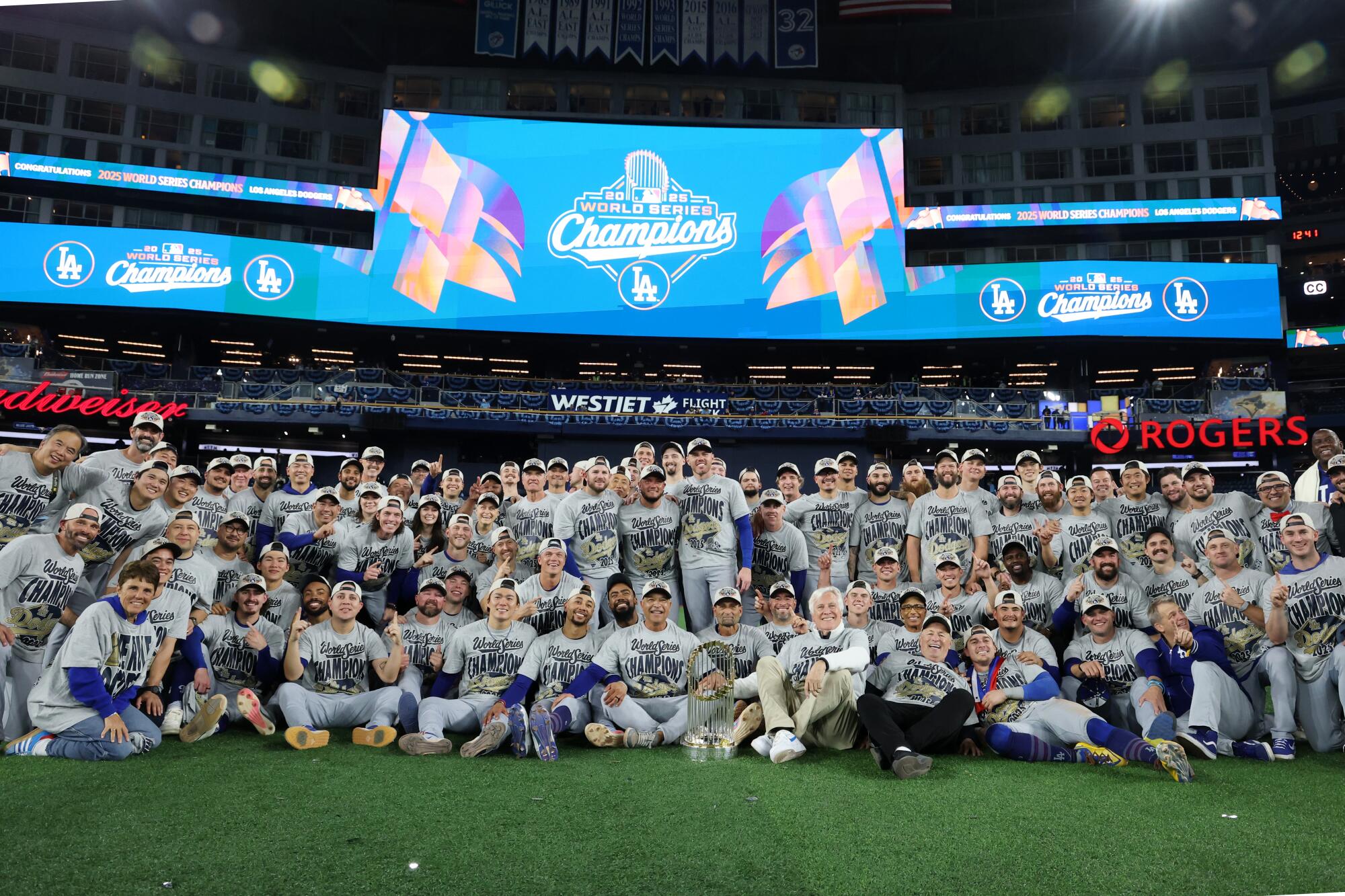
Yeah, congrats to the Dodgers. Back-to-back titles. Filthy. Fully earned. Will Smith launching one into orbit, Yoshinobu Yamamoto shutting the door, and a clubhouse full of guys who know how to finish. But let’s not get it twisted. This isn’t the end of the story. This is the starting gun for the next war in baseball. Owners smell blood. Players smell a fight. Fans? We’re stuck in the middle trying to figure out how this keeps happening.
The Ugly Math Everyone Will Throw at You
Let’s cut the fluff and talk numbers. The Dodgers’ payroll for 2025? Around $350 million. Total cash spent? Close to $391 million. That is the scale other teams look at and start crying “unsustainable.” That is reality. That is why we have superteams. That is why small-market owners complain but never actually fix anything.
The luxury tax threshold for 2025 is $241 million. Cross that line and the penalties climb fast. It’s supposed to slow down spenders. It doesn’t. Teams pay it because a title is worth more than a fine. That is why the richest teams treat the luxury tax like a toll road, not a dam.
MLB raked in over $311 million in luxury-tax payments last season. The Dodgers alone paid over $103 million. One team, a third of the league’s total. That is the kind of number owners will wave in boardrooms and in op-eds as proof the system is broken.
Mega Deals Are Now the Standard
Big contracts are normal now. Shohei Ohtani, $700 million over 10 years. Juan Soto, $765 million over 15. These contracts aren’t just paychecks. They are magnets for other stars and weapons for owners who want to rewrite the rules. Small-market teams see this and know they will never compete unless they get help or the rules change. And that is why the cap talk is coming, whether players like it or not.
The Average vs. Median Lie
The talking heads will throw around “average salary over $5 million.” Yeah, technically. Average is $5.16 million. Median? About $1.35 million. That tells you everything. A few stars are pulling the numbers up, while most of the league is living paycheck to paycheck compared to them. That gap is exactly the argument owners will use to say the system is “unbalanced.” It’s not unbalanced for them, it’s unbalanced for everyone else.
Tarik Skubal is the Case Study
Want to see how talent flows to the rich teams? Look at Tarik Skubal. 18-4 record, 2.39 ERA, 228 strikeouts in 2024. One of the very best pitchers in baseball. Detroit’s payroll? Around $155 million. Dodgers? $350 million. That’s why when a player like Skubal hits the market, he ends up in New York, Los Angeles, or another team that can pay him. Small markets just can’t compete. Call it talent drain, call it economics, call it whatever you want. It is predictable. That is why the “if you can’t beat them, join them” mantra works for rich teams every single year.
Luxury Tax is a Toll, Not a Fix
The luxury tax is not a solution. Nine teams went over last season. Progressive surtaxes only make it more expensive for repeat offenders. That looks like a fix on paper, but it isn’t. Paying a tax is easier than changing behavior. If owners want guarantees, they will push for a hard cap because writing a check is easier than actually changing how you run your team.
Why Owners Will Push for a Cap and Why a Lockout is Likely
A repeat champion with a $350 million payroll hands owners the perfect talking point. Cap it or restore competitive balance. That is the narrative. From the owners’ side, a cap equals predictable spending and fewer runaway dynasties. From the players’ side, it is a ceiling on their lifetime earnings.
The players will not roll over. Baseball’s labor history is brutal. The 1994-95 strike lasted 232 days and canceled the World Series. The 2021-22 lockout delayed Opening Day. If the owners push a permanent cap, we could be looking at months of fighting. A long stalemate that freezes the league and burns goodwill with the fans.
No Cap is Bad. No Floor is Worse
Here is the truth. A cap punishes players. The real problem is teams that refuse to invest. Payrolls of $60 million compared to $350 million are insane. A salary floor fixes that. Force minimum spending. Force bad owners to compete. Shrink the talent vacuum that superteams exploit without stealing from the players. Median vs. average salaries prove it. The gap at the bottom is killing competition.
Combine that with conditional revenue sharing and real penalties for owners who refuse to compete. Force sales. Garnish revenue. Hit them in the wallet. That is how you actually fix baseball.
Broadcast Money is the Real Engine of Inequality
The Dodgers’ local media market is massive. That is how they can spend $350 million without blinking. Smaller teams cannot compete. Fixing player pay isn’t enough. Revenue distribution must change. Make revenue sharing conditional on actual spending. Take away local privileges for underinvesting owners. Hit them where it hurts. That is the lever that changes outcomes.
Where This All Ends Up
Here is the blunt truth. This probably ends where it started. No cap, no floor, superteams, Dodgers winning again. Why? Because the incentives are stacked that way. Clubhouse chatter after the celebration already sounds like recruiting material. Players and fans are quoting lines like “if you can’t beat them, join them.”
Blake Snell and Tyler Glasnow literally said that last night. Not a joke, not fluff. That is the playbook. If the culture becomes “join the superteam,” owners with money will keep buying. The players will push back on a cap. We will get bargaining theater, lawsuits, and a long, ugly stalemate.
Short Timeline and the Ugly Options
Here is the playbook for the next few months:
Owners scream about payroll, luxury tax, and mega deals. Expect op-eds and coordinated messaging.
Players reject a hard cap because it permanently cuts top-market value. The MLBPA will litigate and stall.
Negotiations stall. Lockout or work stoppage risk skyrockets. Past labor fights weren’t quick or clean.
The real fix? Strong salary floor. Conditional revenue sharing. Transparency in local media rights. Penalties for lazy owners. That is the only way to shrink the talent vacuum.
Final Word
Congrats to Dodgers fans. Back-to-back is elite, and they earned it. But do not fool yourself. This trophy just gave owners the ammo they need to start the next war.
A repeat champion with a $350 million payroll and headline deals is going to push owners to demand a cap. The players will not hand over their earning potential quietly. If you actually care about the sport, push for a salary floor and penalty structure that forces investment from bad owners. That is the only thing that stops superteams.
Enjoy the parade, Dodgers fans. You won. For everyone else? Buckle up. This offseason is about to get nasty.