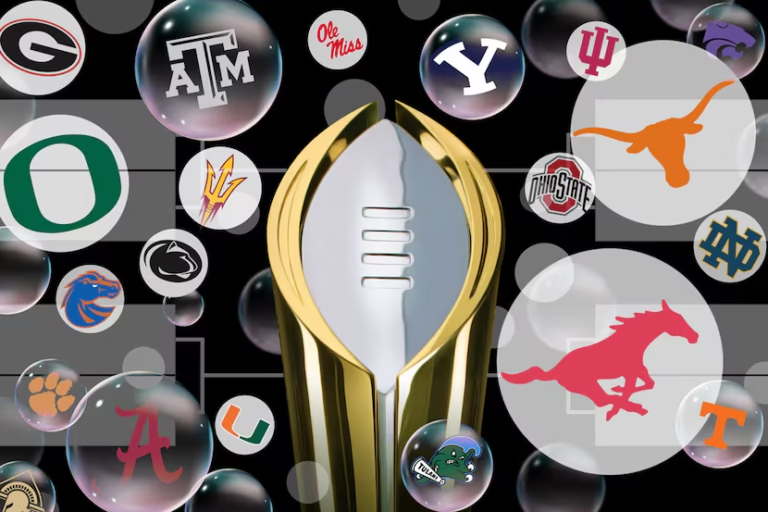

The 12-team CFP was supposed to end the arguing. Instead it built an argument factory, because now the bracket itself is the villain.
The whole sales pitch was clean. Be elite, earn the bye, get the edge. Except the “edge” keeps looking like a deep freeze while somebody else is out there playing real, live playoff football. The reward for being great is sitting around hoping your timing survives a month of practice reps.
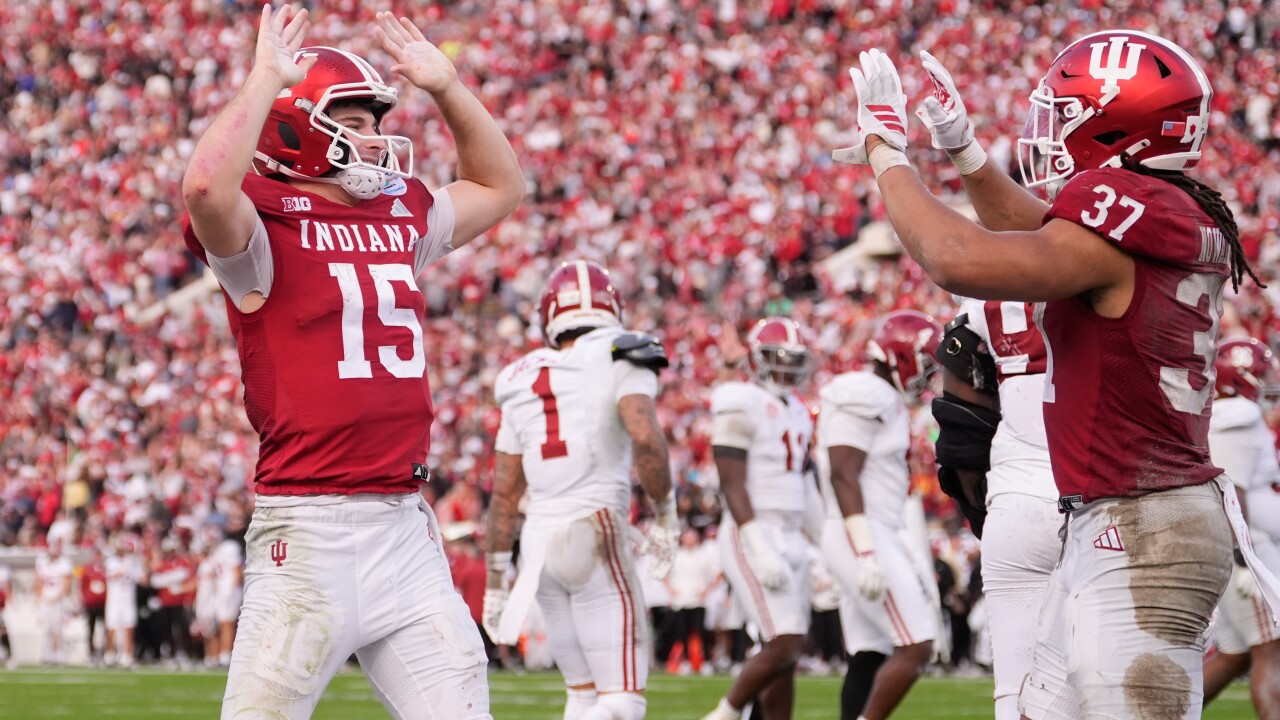
Indiana just blew that contradiction up on a national stage. Rose Bowl. Indiana 38, Alabama 3. The Hoosiers are 14-0, and they didn’t win with gimmicks or vibes. Fernando Mendoza went 14-of-16 for 192 yards and three touchdowns, and Indiana ran for 215 yards while Alabama finished with 193 total yards. When the numbers are that lopsided, you can’t hide behind “bad night.” That’s a grown-up team taking another grown-up team’s lunch money in front of everybody.
And the scary part is what Indiana had to do just to make the bye look normal.
Is the bye a reward or a trap
Through the first two years of this 12-team era, teams coming off first-round byes are 1-7 in the quarterfinals. Indiana finally snapped the streak, but the bigger picture is still ugly. The first six bye teams lost their first game in the new format, and it wasn’t just close losses or random bounces. In those first six quarterfinals, the bye teams barely led at all, under five minutes of regulation combined. That’s not “small sample weirdness.” That’s a pattern that feels like a feature, not a bug.
If you’re a top seed, the bracket is asking you to turn playoff intensity on like a light switch. Meanwhile your opponent has already taken the punches, settled their rotations, and learned what the moment feels like when the season is hanging by a thread. That matters in football. Timing matters. Tackling matters. Third-and-short muscle memory matters. You can’t practice your way into that exact speed.
Indiana is the first team to prove you can survive it. But the fact that Indiana had to become the first top-four seed to win a game in this format is the whole argument. A bye is supposed to remove risk, not add it. A bye is supposed to be a cushion, not a dare.
What Indiana did to Alabama that people are missing
The laziest response to 38-3 is “Alabama got exposed.” Sure. But if you stop there, you miss why this is gasoline on the format debate.
Indiana didn’t win because Alabama forgot how to play. Indiana won because they played like a team that understands exactly what the bye week can do to you and built their game to punish it. They started patient, got out of the first-quarter feeling-out phase without giving Alabama a cheap spark, and then dropped the hammer in the second. Seventeen points before halftime, and Alabama still had nothing on the board. That’s when a top seed gets dangerous. When the early nerves don’t turn into an early deficit, the talent gap starts showing up as force.
Then you look at the trench numbers and it’s almost disrespectful. Indiana ran for 215. Alabama ran for 23. That’s not a random stat. That’s a thesis. If the team with the logo can’t line up and run the ball in a playoff game, what exactly are we arguing about in December when everyone is debating who “belongs.”
The scary thing for the next round is that Indiana didn’t have to be perfect. Mendoza didn’t need 350 yards. He was efficient, surgical, and Indiana controlled the game like it was on rails. That’s what real contenders do. They don’t chase style points. They make you tap out.
And yes, the irony is thick. Indiana, the team everyone is still emotionally processing as a top seed, is the first one to make the bye look like a reward instead of a trap. That does not solve the problem. It just proves one team is good enough to survive it.
Why the first-round game might be the real advantage
Nobody wants to say this out loud because it sounds backwards, but the format is starting to whisper it every year. The sweetest spot might be hosting a first-round game.
You get the playoff nerves out of your system on your own field. You get a real hit count. You get a real whistle. You get the emotional snap of knowing one bad quarter ends everything. Then you roll into the quarterfinals already operating at that speed.
This year’s quarterfinals were basically a billboard for that idea. Miami, the 10 seed, beat Ohio State 24-14 in the Cotton Bowl. Oregon, the 5 seed, shut out Texas Tech 23-0 in the Orange Bowl. Ole Miss, the 6 seed, won a knife fight with Georgia 39-34 in the Sugar Bowl. That’s three more bye teams gone. Again.
And last year was the original warning siren. In the first year of the 12-team format, every top-four seed with a bye lost in the quarterfinals. All four. That’s the foundation the “bye is a trap” crowd has been standing on ever since. Two seasons in, the sport has basically handed the internet a statistic that does not shut up.
You can argue sample size, and you’re not wrong. Eight games is not a decade. But fans aren’t reacting to math on a spreadsheet. They’re reacting to how it looks. And it keeps looking like the bye teams show up cold while the other side shows up already breathing fire.
Why Ole Miss beating Georgia makes the SEC argument worse, not better
Ole Miss 39, Georgia 34 should have been the kind of result that cools off the conference wars. Georgia is Georgia. Ole Miss is in the SEC too. Everybody can clap and move on.
Instead it poured jet fuel on the whole thing because it happened in the same window as Indiana turning Alabama into a historical footnote.
Ole Miss didn’t stumble into that win. With 26 seconds left on third-and-5, Trinidad Chambliss hit De’Zhaun Stribling for 40 yards to flip the field and set up the kick. Lucas Carneiro drilled a 47-yard field goal with 6 seconds left. Then Georgia’s desperate kickoff chaos ended with a safety with 1 second left, the kind of ending that makes a stadium feel like it’s glitching.
And the box score backs up the eye test. Ole Miss outgained Georgia 473-343 and held Georgia to 3-for-13 on third down. That’s not fluky. That’s execution under a blowtorch, and it’s exactly the kind of game the expanded playoff was supposed to deliver.
So now the SEC gets two headlines that point in opposite directions, and fans do what fans always do. They grab the headline that supports whatever they already believed.
The pro-SEC crowd points at Ole Miss surviving Georgia and says the league is built for this. The anti-SEC crowd points at Alabama losing by 35 and says the logo got in on brand power and then got vaporized the second the bracket asked for proof.
Both sides have something to hold. That’s the problem.
What are we actually rewarding now
This is where the argument changes shape. It used to be “who’s best.” Now it’s “what does the sport want.”
Are we rewarding full-season dominance, or are we rewarding being the hottest team on the right date. Because the bracket is starting to feel like it rewards heat more than it rewards status.
A bye is supposed to be protection from randomness. But the new rhythm of the playoff is creating a different kind of randomness, the timing problem. The top seed can go a long stretch without a meaningful snap while the opponent has already played in a do-or-die environment. If the opponent comes out loose and sharp, the top seed has to survive the first wave before its talent advantage even matters.
Indiana survived the first wave and then turned Alabama into dust. Georgia didn’t. Ohio State didn’t. Texas Tech didn’t. That’s why nobody can stop talking about the bye like it’s cursed. It keeps acting cursed.
And the no-reseeding bracket adds another little twist. You don’t get rewarded for being the top seed by drawing the softest remaining opponent. You get whoever survives your side of the bracket, even if that survivor is playing like they just discovered fire. The tournament doesn’t protect you from that. It dares you to handle it.
What the betting markets are quietly saying
The markets are not polite about narratives, and right now they’re treating Indiana like the center of gravity.
After the quarterfinals, Indiana opened as the national title favorite at +135. The Hoosiers also opened as a 4-point favorite over Oregon in the Peach Bowl on January 9 in Atlanta. Miami opened as a 3-point favorite over Ole Miss in the Fiesta Bowl on January 8 in Glendale. Ole Miss is still sitting as the longshot left on the board at +550 even after surviving Georgia.
That set of numbers tells you something without even trying to be poetic. The market respects Indiana’s dominance, and it’s not giving Ole Miss full credit for beating Georgia because the path is still brutal. Two more wins, and both are against teams that have already proven they can handle this bracket’s weirdness.
There’s also a sneaky little context swing that makes the Indiana-Oregon semifinal feel even louder. Indiana already beat Oregon 30-20 in Eugene back in October. So the Peach Bowl is not just a semifinal. It’s a rematch with a title-game trip on the line, and Indiana is the one team that finally made the bye look survivable.
That’s the argument factory in one matchup. Oregon is battle-tested and mean. Indiana is rested and rolling, and they just produced the most violent scoreboard of the quarterfinals.
The counterpoint that will not go away
Here’s what the “bye is fine” crowd is going to say, and they won’t be totally wrong.
Football is violent. Single elimination is cruel. Eight games is not enough to rewrite how we think about rest. If Georgia catches a break or Ohio State hits a couple of early explosives, we’re not even having this conversation. The bye didn’t lose those games. Teams lost those games.
That’s a fair argument. It’s also incomplete.
Because the point is not that the bye guarantees a loss. Indiana just proved it doesn’t. The point is that the bye is supposed to guarantee an advantage, and it has not. Two years in, the top-four seeds have walked into their first playoff game like they’re trying to remember the speed of their own season, while the other side is already sprinting.
You can keep calling it noise. Or you can admit the format might have accidentally created a postseason where the teams playing the most meaningful football in late December are the ones carrying the sharpest edge into January.
So pick your side and don’t hide behind generic takes.
Is the bye a reward, or is it a trap that turns the top four into sitting ducks if they start slow.
And on the SEC argument, which headline is the real one. Ole Miss winning a playoff knife fight against Georgia, or Alabama getting erased by 35 the second the bracket asked for proof.
ROLL WITH HAIL MARY MEDIA
Like this kind of chaos? Stay tapped in.
Follow us on X for live reactions, bad beats, and daily sports rants.
FOLLOW @HAILMARYMEDIA_ ON XNot done yet? CLICK HERE for more blogs.