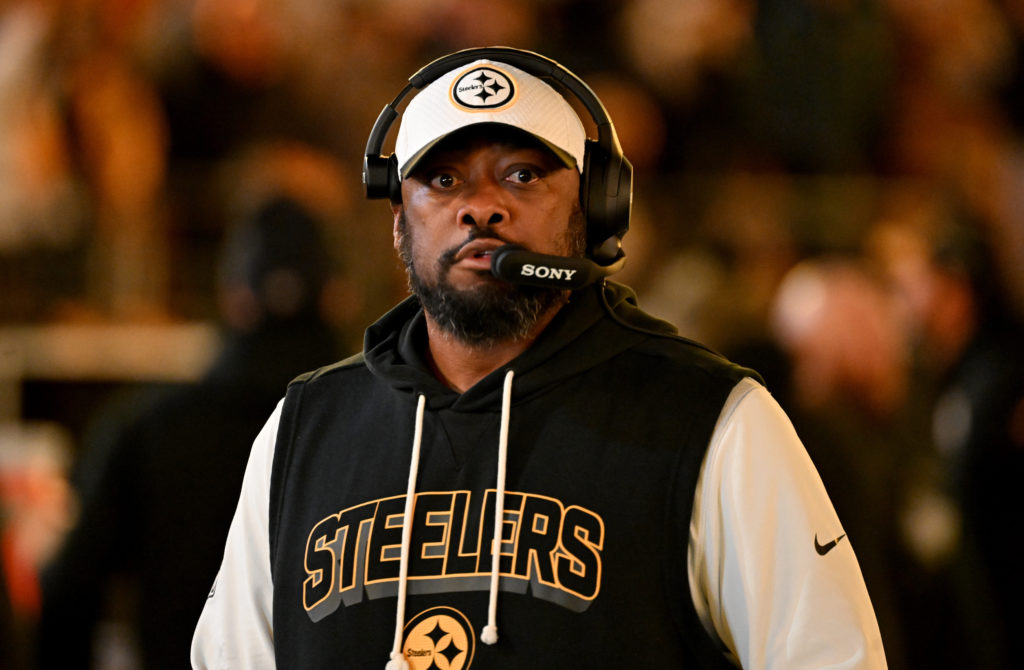

Mike Tomlin steps down ending his 19 year run in Pittsburgh, but it also forces the Steelers to finally admit the truth: this thing needs a real reset.
You can respect what Tomlin built and still believe this was the right time. I’m in that camp. Nineteen seasons, never a losing record, a Super Bowl ring, constant relevance. That’s the good part. The other part is the Steelers have been living in playoff quicksand for almost a decade, and 2025 was the year the whole thing finally snapped in public.
Mike Tomlin’s Steelers History: Great Coach, Historic Stability
Tomlin took this job in 2007 and walked into the most “Pittsburgh” expectations in sports. You’re not here to be cute. You’re here to win divisions, bully people in December, and do damage in January.
For a long time, he did. He won Super Bowl XLIII after the 2008 season and got back to another Super Bowl after the 2010 season. He stacked 13 playoff trips and eight AFC North titles. He leaves with a 193-114-2 regular season record and the kind of weekly floor most franchises would kill for.
The crazy part is the streak. Nineteen seasons with no losing record. That’s not normal in this league. Not with injuries, not with cap cycles, not with roster turnover, not with quarterbacks aging out. Tomlin kept the Steelers from ever being a true clown show, and that matters.
But that same stability became a trap once the roster stopped being championship-level.
When “Fire Tomlin” Went From Background Noise to a Real Movement
Steelers fans didn’t wake up in 2025 and randomly decide they were done. The “Fire Tomlin” talk has been building for years, and you can trace it through the losses that felt like warnings, not one-offs.
A lot of people point to the 2017 season ending at home against Jacksonville as the first time the temperature really changed. That game didn’t just sting, it made fans question how a team with that talent looked that loose and that unready.
Then the big one for a lot of folks was the 2020 wild-card loss to Cleveland at home. That wasn’t a “tough break.” That was a humiliation. After that, every early playoff exit poured gas on the same argument: the Steelers are always “in it,” but they’re not built to beat the best.
By the time the post-Ben years hit, patience got thinner because the offense became a yearly science experiment. Different quarterbacks, different coordinators, different patch jobs, same feeling. The Steelers kept surviving. Fans wanted them to evolve.
2025 Was the Nightmare Year Because the Steelers Actually Tried the Shortcut
Here’s what made 2025 feel worse than the other frustrating seasons: the Steelers swung big.
They didn’t just run it back and hope. They made headline moves. They had already traded for DK Metcalf in March 2025 and paid him. They moved George Pickens to Dallas in May. They traded for Jalen Ramsey and Jonnu Smith in late June. Then they signed Aaron Rodgers to a one-year deal.
That’s not a team quietly “building.” That’s a team trying to kick the door in right now.
And what did it get them? A 10-7 record, an AFC North title, and then another playoff night that felt over before halftime.
They clinched the division with that 26-24 win over the Ravens in the regular-season finale, the one where Baltimore missed a last-second kick. That should’ve been a springboard moment. Instead, it ended up feeling like the high point before the crash.
Because one week later, the Steelers hosted Houston and got blasted 30-6 in the wild-card round. The Texans scored two defensive touchdowns, and the Steelers offense finished the season managing 175 total yards at home in a playoff game. That’s the kind of box score that makes a franchise question everything.
The Exact Moment It Turned: “Fire Tomlin” Chants and Renegade Booed
If you want the moment the relationship went from strained to cracked, it wasn’t the playoff loss. It was before that, when the building started talking back.
On Nov. 30, 2025, the Steelers lost 26-7 to Buffalo. They led 7-3 at halftime and then got erased in the second half. During the fourth quarter, fans started chanting “Fire Tomlin,” and “Renegade” got booed.
You don’t hear that in Pittsburgh unless the fanbase feels like it’s stuck in the same movie every year. People can handle losing when there’s a plan. People lose their minds when it feels like the plan is just hoping harder.
That night wasn’t just a bad loss. It was a warning flare. The Steelers won the division anyway, but you could tell the trust was fading.
Why Stepping Down Was the Best Move for Both Parties
This is where the hot take needs to be said clearly: Tomlin stepping down doesn’t mean he failed. It means the Steelers and Tomlin finally hit the point where staying together wasn’t helping either side.
Tomlin shouldn’t have to coach a rebuild with half the city waiting to pounce on every ugly Sunday. He earned better than that. He also doesn’t need to be the face of the Steelers’ quarterback mess forever.
And the Steelers needed a clean break because they were never going to fire him. That’s not how they operate. This wasn’t going to end with a dramatic firing and a messy press conference. It was either going to be a slow, miserable drift, or a hard reset.
A hard reset is better.
Tomlin gets to leave with his legacy intact. The Steelers get to stop pretending stability equals progress.
The Steelers Rebuild Reality: New Coach, New QB, and a Long Road
Now comes the part Steelers fans don’t love hearing: this is not a “one new coach” fix. This is a multi-year rebuild, and it’s going to touch everything.
Quarterback is the obvious one. Rodgers is 42, noncommittal about his future, and even if he came back, you’re still living year-to-year. He threw for 3,322 yards and 24 touchdowns in the regular season, but that doesn’t change the reality that you need the next guy, not the next band-aid.
The offensive line is the other truth bomb. The Steelers can talk toughness all they want, but the offense has been too fragile when the games get tight. Houston sacked Rodgers four times in that wild-card loss and turned Steelers mistakes into points. In the biggest moments, protection and execution fell apart.
And then there’s the defense. It still has star power, but time is real. Cam Heyward is 36. T.J. Watt is 31. Jalen Ramsey is 31. Those are cornerstone names, but they’re also a clock on the wall. If the Steelers don’t nail this transition, you’re going to waste what’s left of that window.
Offensively, the Steelers have one true top-end weapon that defenses actually fear on the outside: Metcalf. He finished 2025 with 59 catches for 850 yards and six touchdowns, and he’s a legit problem for corners. But the rest of the passing game has been too inconsistent, and the Steelers haven’t had the kind of depth that turns an offense from “fine” into “scary.”
Jaylen Warren ran hard and put up 958 rushing yards, but nobody’s confusing this unit with an offense built to go punch-for-punch with the AFC’s best.
Why the Steelers Job Isn’t as Attractive as People Think Right Now
Steelers fans love to say, “This is the Steelers, everyone wants this job.” The brand matters, the history matters, and the stability matters.
But coaches don’t take jobs based on highlight reels from 1978. They take jobs based on the plan in front of them.
Right now, Pittsburgh has a quarterback question, an offense that still feels stuck between eras, and a defense that needs a smart transition before it gets old overnight. You also have a fanbase that expects excellence immediately and a media spotlight that turns every press conference into a referendum.
That’s pressure. Some coaches want that. Some coaches want a cleaner runway.
The Steelers can still hire well because the organization is stable and respected. But the pitch has to be honest: you’re not inheriting a contender, you’re inheriting a rebuild with expectations.
Steelers Coaching Candidates to Watch: Go Younger and Build It Right
If the Steelers are serious about changing their direction, they should hire like a modern franchise. Younger, hungrier, adaptable, and willing to build a quarterback instead of praying for one.
Here are the names I’m watching.
Chris Shula (Rams defensive coordinator)
Shula makes sense if the Steelers want a sharp, modern defensive mind who’s been in a system that evolves year to year. He’s not a gimmick hire, and he’s not a retread. He feels like the steady hand who can run the whole operation while building a staff that actually helps the offense catch up to 2026 football.
Kelvin Sheppard (Lions defensive coordinator)
This is the energy and leadership swing. Sheppard is young, respected, and has that presence that players respond to. If the Steelers want to reset the building and connect with a younger locker room, he fits the moment, but the staff around him would have to be nailed, especially on offense.
Jesse Minter (Chargers defensive coordinator)
Minter is one of those “smart, aggressive, adaptable” defensive coaches that teams keep chasing. His defenses are built to attack what the offense is doing, not just line up and hope. If the Steelers want a coordinator-style head coach who brings structure and game-plan flexibility, Minter checks that box.
Klint Kubiak (Seahawks offensive coordinator)
If you want to fix Pittsburgh’s biggest issue, offense, then hire offense. Period. Kubiak would signal the Steelers are building a quarterback-friendly system and committing to modern concepts instead of playing 2008 ball and asking the defense to save everybody.
Marcus Freeman (Notre Dame head coach)
Freeman is the big swing. He’s a CEO-style leader, a culture builder, and a guy who recruits and connects. The problem is he’s expected to stay at Notre Dame, so this one is more “watch the smoke” than “book the interview,” but if the Steelers want a true program builder, that’s the archetype.
Brian Flores (Vikings defensive coordinator)
Flores is the most proven “edge” hire on the list. He’s been a head coach, he’s respected, and he would bring an attitude that Steelers fans would love instantly. The whole decision would come down to whether he can build the right offensive staff and commit to developing a young quarterback, because that’s the only way this works long term.
The Bottom Line: This Had to Happen, and Now the Steelers Have to Be Brave
Mike Tomlin stepping down should feel heavy because it is. You don’t get 19 seasons of competence in the NFL unless you’re special at this job.
But the Steelers were stuck. They tried the shortcut in 2025 with Rodgers and big moves, won the division, and still ended the season getting run out of their own stadium in the playoffs. Fans booed “Renegade.” Fans chanted for Tomlin to go. That’s Pittsburgh telling you the relationship hit its expiration date.
Now the Steelers have a choice they’ve avoided for years: do the rebuild the hard way or keep chasing patches and vibes.
Hire a younger coach with modern ideas. Build the quarterback plan like adults. Invest in the offense like it’s 2026, not 1996. If they do that, Steelers fans can handle the growing pains because at least it’s heading somewhere.
If they don’t, then Tomlin stepping down won’t be the end of the era. It’ll just be the start of a longer, uglier one.
ROLL WITH HAIL MARY MEDIA
Like this kind of chaos? Stay tapped in.
Follow us on X for live reactions, bad beats, and daily sports rants.
FOLLOW @HAILMARYMEDIA_ ON XNot done yet? CLICK HERE for more blogs.