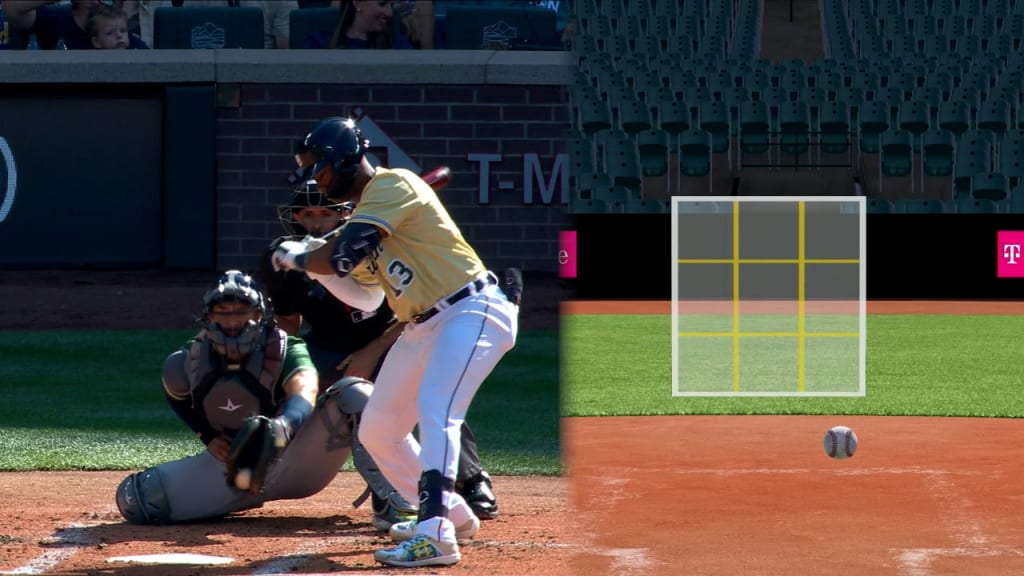

MLB’s ABS challenge system will roast players who swear they know the strike zone. Early spring numbers show challenges are basically a coin flip, and that’s the whole joke.
Everybody wants robot umps until the players can’t stop challenging the wrong pitches. The helmet tap is about to become baseball’s new version of yelling at the TV, except now the TV answers back in 14 seconds and tells you you’re wrong.
Here’s the thing: this isn’t really a “robots are coming” story. It’s a game-flow story. It’s a leverage story. It’s a “who’s actually smart under pressure” story. And it’s going to expose a truth every fan already knows, but players don’t want to admit: a lot of dudes don’t “know the zone.” They know their feelings.
The early ABS challenge numbers are telling on everybody
Spring training gave us a nice little preview of how this is going to go. Teams were barely over 50 percent on challenges, hovering around 52 percent. That’s not “players are elite at calling balls and strikes.” That’s “players are guessing with confidence,” which is the most baseball thing of all time.
And the volume matters too. We’re not talking about one dramatic moment a night. It’s more like four challenges a game when you add it up, and that’s in games that already have enough dead time if we’re being honest. The only reason it works is because it’s fast. The average challenge resolution has been around the mid-teens in seconds, roughly 14 seconds, which is nothing in baseball time.
That speed is the whole ballgame. If it’s quick, fans will love it because it feels like a clean correction, not a commercial break. If it drags, everybody’s going to hate it because it turns a tight at-bat into a courtroom drama. The early returns say it’s quick enough to keep the rhythm, and that’s why this has a chance to stick without ruining the vibe.
Also, the success rate being a coin flip is exactly why you should expect chaos early. If players were converting 80 percent, you’d get disciplined challenges and clean outcomes. At 52 percent, you’re going to get a whole lot of “I can’t believe they called that” energy, and half the time the system is going to respond with “actually, yes they did.”
Players don’t know the zone, they know what they want the zone to be
This is where the comedy really lives. Players talk about the strike zone like it’s a sacred thing they can see perfectly. Then you give them a challenge button, and suddenly it’s a bunch of grown men slamming it like they’re playing a video game.
Hitters are the worst offenders in a different way than pitchers. A hitter isn’t processing the strike zone like a computer. He’s processing it like a guy trying not to get embarrassed. If he froze on a slider, his brain screams “that was off.” If he took a fastball at the top, he feels like it was high because it looked high, even if it clipped the zone. That’s not knowing the zone. That’s surviving.
Pitchers are even funnier because they’re emotionally attached to every pitch they throw. A pitcher thinks his best slider is a strike even if it bounces. He thinks the backdoor cutter nicked because it looked cool. He’s been told his whole life that conviction matters, and now conviction is going to cost you a challenge.
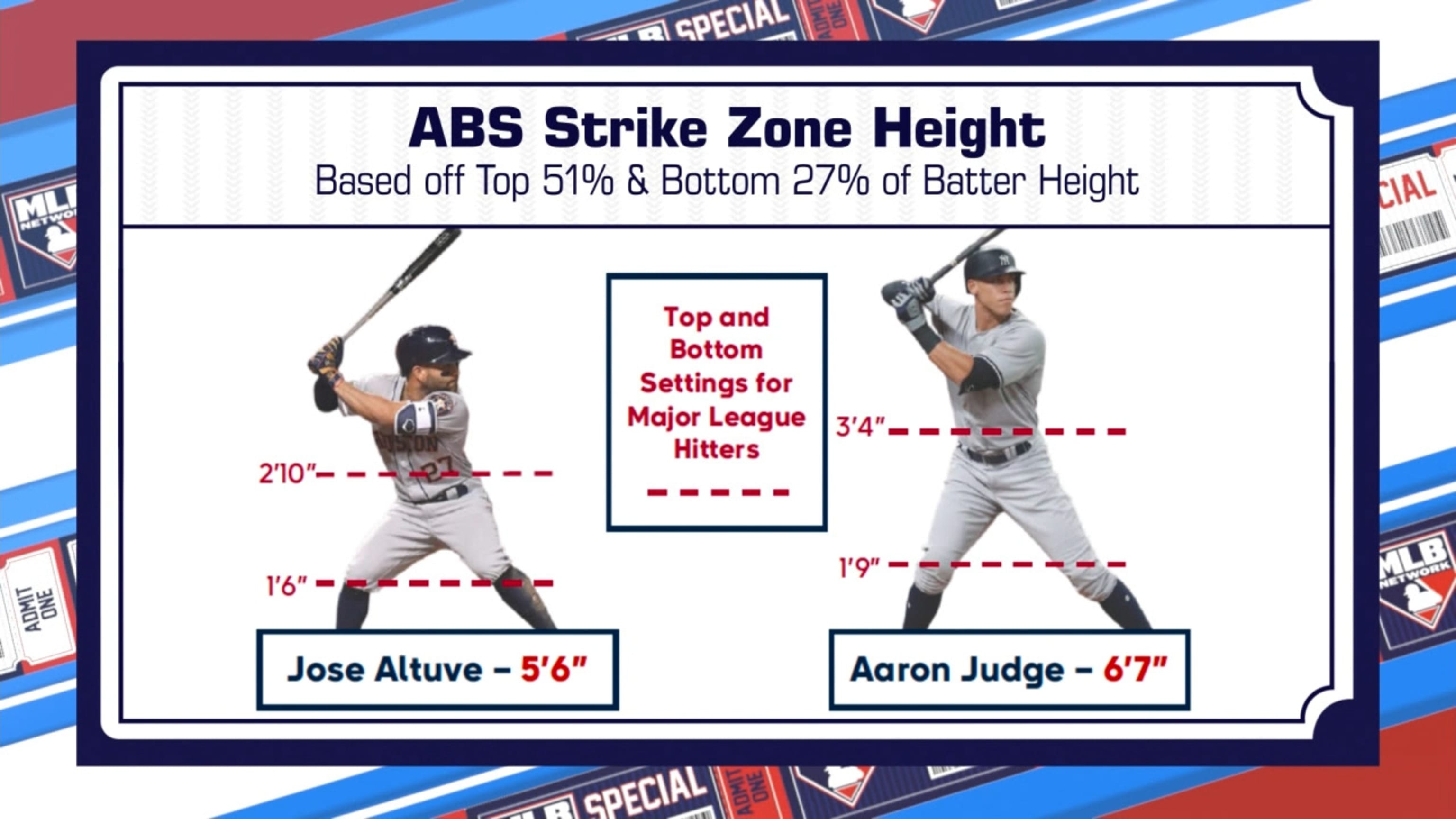
The ABS zone also isn’t the imaginary zone players have argued about forever. It’s more rulebook-clean. It’s built on the plate width and player measurements for the top and bottom. The human-called zone has always had a little personality, a little rounding, and a whole lot of “depends who’s behind the plate.” Players have adjusted to that for years. The challenge system is going to punish the guys who never actually adjusted and just complained their way through it.
And that’s why the “everybody knows the zone” crowd is about to get humbled. If you truly know it, you should be crushing challenges. If you’re hovering at coin-flip accuracy, what you actually know is when you feel mad.
The stat that matters is speed, because this is about the feel of the game
Fans don’t care about ABS because they’re obsessed with technology. Fans care because they’re sick of games swinging on a blown call in the eighth or ninth. That’s the moment that sticks in your ribs. You can live with a missed pitch in the second inning. You do not forget a bad strike three with the tying run on base.
So the key isn’t “robot zone equals perfect.” The key is “does this fix the worst moments without turning the game into a stop-and-start mess.” If challenges keep resolving in roughly 14 seconds, you get the best of both worlds. You keep the human ump calling the game so the flow feels normal, and you get a quick correction on the pitch that decides an at-bat that decides the inning that decides your night.
That’s why this system has a chance to actually make the product better, not just different. It’s not full ABS every pitch. It’s ABS when somebody is willing to spend a resource to prove the call is wrong.
Which brings us to the part nobody is talking about enough.
ABS challenges are about to become baseball’s version of clock management
This is the new skill, and it’s going to separate serious teams from sloppy teams. Challenges are limited. If you’re right, you keep it. If you’re wrong, you burn it. And you don’t get to phone a friend. The pitcher, catcher, or hitter has to trigger it immediately.
That means the best teams are going to build a real approach. Not a vibe. Not “whenever we feel like it.” An approach.
You’re going to see certain clubs empower the catcher like a quarterback. If the catcher is confident, you challenge. If he’s not, you live with it. You’re going to see teams set quiet rules based on count, inning, and leverage. Full count with runners on late? That’s worth it. A random 1-0 pitch in the second inning? Probably not.
And then you’re going to see the dumb teams. The dumb teams are going to let their loudest hitter tap the helmet in the third inning because his ego got bruised. They’ll lose the challenge. Then, in the seventh or eighth, when a call actually matters, they’ll have nothing left. That’s not bad luck. That’s bad management, and it will cost real wins over a season.
By mid-season, the smart teams will treat challenges like timeouts. They’ll save them for leverage, they’ll understand the math, and they’ll get a tiny edge that adds up. The teams that don’t will be the ones screaming about the system when the system isn’t the problem.
Pitch framing isn’t dead, but the leverage value is changing
Everybody hears ABS and immediately thinks “catchers are cooked.” Not really. Most pitches will still be called by a human umpire, and most called pitches won’t get challenged. That means framing still matters over the course of a full game. Catchers will still steal strikes on the margins, and pitchers will still hunt the edges.
What changes is the big-money moment. The classic framing highlight, the borderline pitch on a full count that turns into strike three, is exactly the pitch that’s most likely to get challenged. Those are the moments hitters care about most. Those are the moments dugouts explode over. And those are the moments the system is designed to correct quickly.
So if you’re a veteran catcher who’s made a career stealing the low strike, you’re still valuable, but your biggest steals are now at risk of getting wiped off the board. That’s a real shift.
It also creates a new kind of catcher value that fans will actually notice. Who makes good challenge decisions? Who stays calm? Who doesn’t let emotion burn resources? The best catching staffs are going to quietly win a couple games a month just by being disciplined. The worst ones are going to hand opponents outs because they couldn’t help themselves.
If you want to talk about “edge,” this is the new edge. Not just receiving. Managing the moment.
The types of hitters and pitchers who get helped and hurt the most
This isn’t going to affect everyone evenly. Some guys are going to benefit just because their style fits the system. Others are going to get exposed because their whole routine depends on the old gray area.
Patient hitters are going to love this. The guys who take close pitches, work counts, and force pitchers into the zone are going to pick up a few extra wins inside games. A corrected ball four in the sixth is a baserunner. A baserunner turns into a run with one gapper. That’s how baseball works, and it’s why discipline matters more than most fans want to admit.
Smart veterans will also adjust fastest. Not because they’re wiser, but because they actually care about leverage. The veteran who understands “I can’t waste this right now” is going to make better challenge decisions than the guy who is still trying to prove a point to an umpire in February.
Free swingers are going to hurt themselves. Not because the system hates them, but because they’re more likely to challenge emotionally. The hacker who’s already mad he didn’t swing is the same guy who’s going to challenge a pitch that clipped the zone just because he feels like he got squeezed. That’s how you burn a resource and then pretend you got robbed.
On the pitching side, true edge painters can benefit, especially the guys who get punished by inconsistent zones. If you’ve got a pitch that legitimately clips, the challenge system can save you in big moments when a human miss happens.
The biggest losers are pitchers who have lived off the “expanded” zone for years. You know the type. Sinkers that finish under the zone but get called because the catcher is good. Sliders that start off and stay off but get chased by umps late in games. Those guys are going to feel like the rug got pulled out from under them in the exact moments they used to survive.
And the pitchers most likely to torch their own team are the emotional ones. If you’re the kind of guy who thinks every pitch is perfect, you’re going to challenge and lose more than you think. The system isn’t out to get you. It’s just not impressed by your confidence.
Why fans should care: this will change the tension of late innings
A good baseball game is tension. It’s that feeling when you’re up one in the eighth and every pitch feels like a car crash waiting to happen. When that tension gets hijacked by a brutal call, it’s not “part of the game.” It’s a buzzkill.
If ABS challenges stay fast, fans get something valuable. You get the drama of the moment, you get the quick resolution, and you don’t have to sit through a three-minute replay review to fix a pitch that everybody in the stadium just saw on the board.
It also adds a new layer of argument that’s actually fun. Now when a player challenges, it’s not just yelling at a guy in blue. It’s putting your credibility on the line. If you’re wrong, everybody knows immediately. If you’re right, you get to stare into the dugout like you just called your shot.
That’s entertainment. That’s also accountability, which baseball desperately needs in the tightest moments.
Here’s my prediction: by mid-season, the smart teams will be using challenges like they’re managing a two-minute drill. They’ll have discipline, they’ll have hierarchy, and they’ll steal a couple games because they used the tool correctly. The dumb teams will waste them early on ego, and they’ll spend all summer screaming about “the system” when the real problem is they can’t manage resources.
If you want a simple way to watch for it, watch who’s in control. If the catcher is running the show and challenging with confidence, that team is probably doing it right. If it’s every frustrated hitter tapping his helmet like a reflex, you’re going to see a lot of wasted bullets and a lot of regret.
Everybody says they want robot umps. Now we’re going to find out who actually wants a fair zone, and who just wants to be right.
Get a 100% deposit match on Chalkboard
Use promo code HMM at sign up to claim a 100% deposit match.
Sign up with code HMMNew users only. Terms may apply.
Click here to read more blogs