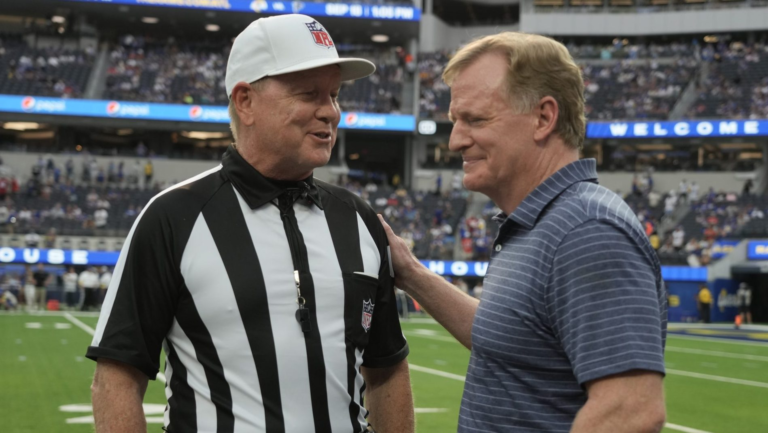

NFL owners wrapped up three days of meetings in Phoenix this week, voted on five rule changes, and congratulated themselves on a productive offseason. Three of those five changes were about the kickoff. Again. This is the third straight year they have fiddled with the onside kick rules, and the big new addition is a disqualification flag that can now be thrown from the NFL command center in New York when on-field officials miss a flagrant foul.
They also locked in nine international games for 2026, a new record, because nothing says “fix the product” like playing more games in London and Melbourne. The NFL rule changes 2026 owners actually approved are fine. They are just not the ones that matter.
Here are four things the NFL should have spent those three days talking about instead.
NFL Rule Changes 2026 Missed the Turf Problem Entirely
The NFLPA released data showing players suffer non-contact lower extremity injuries at a 28% higher rate on artificial turf compared to natural grass. Non-contact. The field itself is doing the damage before anyone touches them. Sports analytics data provided to NBC News showed that 7 of the 10 highest-injury NFL stadiums from 2017 to 2022 had artificial surfaces. MetLife Stadium has been one of the worst offenders for years. Aaron Rodgers walked in there in Week 1, blew his Achilles tendon, and never played another snap. That field has eaten enough careers that it deserves its own injury designation.
The counter you always hear from ownership is that some grass fields are actually more dangerous than some turf fields. Technically true. Completely beside the point. The answer to “this surface causes more injuries” is not “some of the safer surface can also hurt people occasionally.” The answer is to mandate grass league-wide, set minimum maintenance standards, and stop letting stadium revenue decisions override player safety. Right now 15 teams play on grass and 15 play on turf. The Bills are switching to grass when their new stadium opens. Good. The other 14 turf stadiums should not have a choice about it.
The DraftKings ads look great on the painted turf surface. Nobody is watching the game to see ads on the field, and nobody is tuning in at all when the star players are on the injury report.
If 18 Games Are Coming, Build It Right
The NFL is eventually going to 18 games. The owners want the revenue, the next CBA will get it done at some point, and the NFLPA cannot hold the line forever. The only question is how the expanded schedule gets structured, and the current 17-game format already showed what happens when you add a game without adding anything for the players: you just make the season harder and walk away.
Joe Burrow went on Pardon My Take back in 2024 and laid out the correct approach. Two bye weeks. The first works exactly like the current system, staggered by team throughout the season. The second is a league-wide bye around Week 13, where you move Pro Bowl week to that slot, run the skills challenges and 7-on-7 events the way the NBA runs its All-Star weekend, and give every team a real reset going into the final six games of the season.
Burrow’s specific argument was that the NFL should want its best players available for the stretch run, and a mid-season league-wide break helps make that happen. George Kittle backed the idea publicly. Pretty much every player who has been asked about it has said two byes is the right answer.
Expanded roster size needs to come with an expanded schedule too. You cannot ask players to absorb an additional game and then refuse to give franchises more bodies to work with. That is the same logic that produced the broken 17-game year without any meaningful concessions. Do not run that play again.
The Pass Interference Spot Foul Has to Go
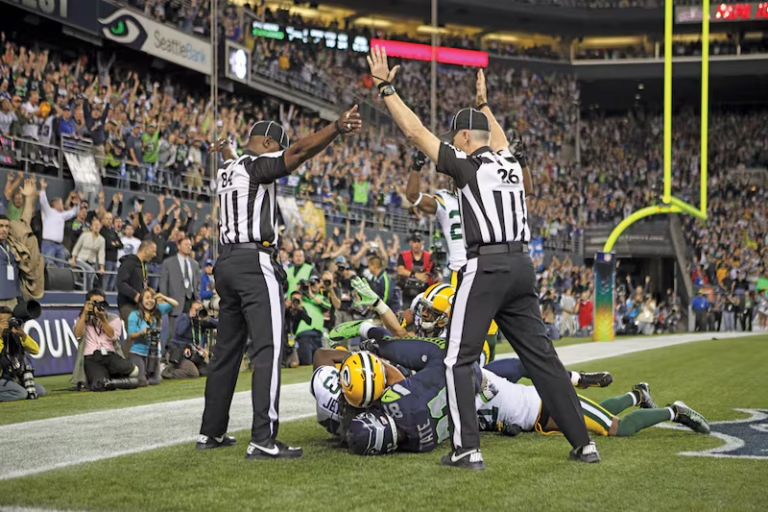
One defensive pass interference penalty can move a team 40 or 50 yards down the field in a single play. NFL teams kick off from the 35. A kickoff return rarely gets you that kind of field position. A holding call is 10 yards. A personal foul is 15 yards. Pass interference, one of the most subjectively called penalties in the sport, awards the exact spot of the foul with no cap. That is not a penalty structure. That is a coin flip with enormous field position consequences attached to a judgment call.
The subjectivity is the core problem. Defensive pass interference and offensive pass interference are bang-bang reads that vary crew to crew and game to game. When you attach an automatic spot foul to that kind of judgment, you are giving referees the ability to shift field position by half the field on a play they are reading in real time. Cap it at 15 yards. The CFL caps it. College football caps it. The NFL is the exception and there is no good argument for why it should be. A team starting at its own 20 should not be at the opponent’s 35 because a cornerback got flagged for contact 45 yards downfield.
TNF Teams Need the Bye Week Before the Game
This is the most straightforward fix on the list. If a team is scheduled for Thursday Night Football, give that team the bye week immediately before it. Right now teams are getting four days between a Sunday game and Thursday kickoff. Four days is not enough time to fully recover physically, install a real game plan, or do much of anything beyond the basics. The result is sloppy football, conservative play-calling, more injuries, and blowouts. People say the long week after Thursday compensates for the short week going in. It does not. The quality of preparation going into the game is the problem, not the recovery after it.
Some TNF games are genuinely good. The ones where both teams are healthy and prepared and actually playing real football are worth watching. You can have more of those by adjusting the bye schedule. The NFL has navigated more complicated scheduling problems than this. The calendar math works.
Bonus: Just Use the College Overtime Format
The NFL changes its overtime rules when something goes catastrophically wrong on national television, specifically when that something involves the Buffalo Bills. The Chiefs-Bills divisional game in January 2022 ended without Josh Allen getting a possession, the entire country melted down, and the postseason OT rules were changed within months. The regular season eventually followed. The league keeps reactive band-aids on a format that frustrates fans every single time it matters.
College football runs alternating possessions from the opponent’s 25-yard line. Each team gets the ball. The coin flip advantage disappears. The games produce genuine drama and clean resolutions. College has been doing this for decades. The NFL could adopt it tomorrow and instead keeps adjusting the rules after the next disaster. The disaster always comes.