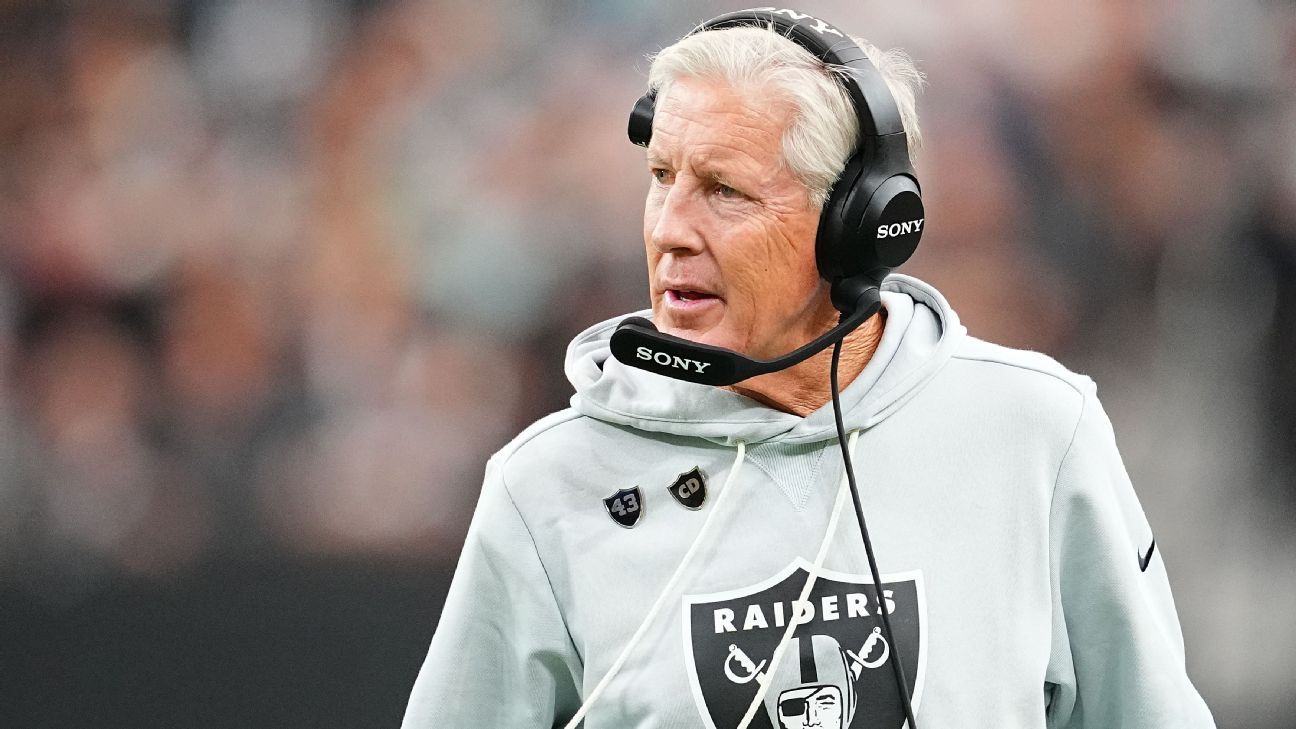

Pete Carroll got fired, and that matters more than any mock draft right now. This isn’t a tweak. This isn’t “one more year and we’ll see.” This is the organization pulling the ripcord after a 3–14 season that went sideways in a hurry, including a 10-game skid that basically turned Sundays into an endurance test.
When you fire the head coach and hold the No. 1 pick, you are not dabbling. You are in a full-on reset, the kind that either becomes the cleanest rebuild you’ve done in decades or the loudest example of how you can still mess up a perfect hand.
That’s why the Fernando Mendoza conversation isn’t just draft talk. It’s a franchise identity test.
Carroll even said it out loud in the moment, “I’ve never even dreamed it would be like this.” That’s not a coach protecting his job with optimism. That’s a coach staring at a collapse and admitting it took over the whole building. Once you get to that sentence, the reset is already happening. The firing just makes it official.
Now the Raiders have to decide if this reset is going to be organized or emotional.
Is this really a reset, or just the usual Raiders churn with a shinier draft pick?
Here’s the difference this time. The Raiders aren’t just changing the head coach. The power structure is different, and the quarterback decision is sitting in the middle of the table like a live wire.
The organization is being framed as John Spytek running football operations in close collaboration with Tom Brady. Not as a mascot. Not as a ceremonial owner. As a real influence on the coach hire and the direction. That matters because it changes who takes the job and what the job even is.
A normal coaching search is about fit with the owner and the GM. This one is also about fit with Brady’s expectations for quarterback development, offense structure, and how decisions get made. Some candidates will see that and think it’s a cheat code. Some will see it and think it’s a trap. Either way, it’s a different kind of reset.
And the last piece of “full reset” is right there in the standings. When you earn the No. 1 pick, you don’t get to pretend you’re a quarterback away unless you actually build like you’re serious. The pick forces you to choose a direction, even if you hate both options.
Why does the Mendoza decision feel like it controls the coach hire instead of the other way around?
Because if the Raiders take a quarterback first overall, the head coach cannot be a vibes hire. He can’t be a “leader of men” headline with a shrug about the offensive staff. He has to come attached to a quarterback plan that survives turbulence.
That sounds obvious until you watch teams do the opposite every year.
Quarterbacks don’t just develop because they’re talented. They develop because the environment stays the same long enough for the player to stack reps, stack confidence, and stack answers. When the scheme changes, when the terminology changes, when the coordinator changes, you’re basically asking a young guy to rebuild the plane while it’s in the air. Some can. Most get scrambled.
That’s why the Mendoza pick and the coach hire are one move. Not two.
If the Raiders want Mendoza, they should be hiring the coach who already knows what Mendoza’s first ten starts look like, what his first rough month looks like, and what the offense looks like when the rookie hits a wall. If the coach can’t describe that without bluffing, you’re about to do this again in a year.
What makes QB feel urgent right now instead of “we’ll see”?
The offense didn’t just struggle. It cratered.
Geno Smith threw 17 interceptions. That’s a weekly tax. It kills drives, kills field position, and eventually kills patience inside a locker room. And even after the midseason offensive coordinator change, the scoring didn’t bounce back. It dipped into the kind of output that makes every game feel like you’re asking the defense to be perfect.
When your offense is living around 12.7 points per game over a long stretch, you don’t get to talk yourself into “continuity.” You don’t get to sell “we’re close.” You get a reset.
That’s the context for the No. 1 pick. It’s not a luxury. It’s not a fun draft toy. It’s a response to a problem that swallowed the season.
Is Mendoza actually a No. 1 pick, or is he just the best story at the top?
Mendoza has the kind of resume that makes people commit early. He won the Heisman. He was productive and clean with the football. The basic numbers are strong enough to feel like a safe argument in a room full of executives who want to stop bleeding.
He threw for 3,172 yards with 36 touchdowns and 6 interceptions across 14 games. That’s not just volume. That’s control. That’s the part that makes teams at the top of the draft start talking like the decision is simple.
But the real case for Mendoza in Vegas isn’t the trophy. It’s the idea that the Raiders can actually build the training wheels around him instead of asking him to be a superhero.
Brock Bowers is already the kind of tight end a young quarterback can use as a security blanket without feeling like it’s a bailout. Middle of the field, quick options, easy completions that keep an offense on schedule.
And the run game has a real piece with Ashton Jeanty. He put up 1,321 yards from scrimmage as a rookie. That matters because it’s proof the Raiders can have an identity that doesn’t require the quarterback to throw lasers on third-and-long all day. Rookie quarterbacks need a run game that keeps them out of panic mode. They need second-and-manageable. They need play action that actually scares people.
So yes, Mendoza can make sense at No. 1 in a way previous Raiders swings didn’t. But only if the Raiders stop acting like the pick itself is the solution.
The pick is the start of the hard part.
What’s the scary counterpoint that Raiders fans can’t ignore?
The last time the Raiders picked first overall, it went about as badly as it can go. That history sits in the background of every argument, even when people don’t say the name out loud. It’s not fair to Mendoza, but it’s real for the fanbase and probably real inside the building too.
That’s why this decision needs to be framed the right way.
The risk is not just “what if Mendoza busts.” The risk is “what if the Raiders do the Raiders thing.”
That’s the thing where the plan changes once the first month gets ugly. The thing where you hire a head coach, then settle for a coordinator, then change the coordinator, then blame the quarterback for not looking comfortable. The thing where you pretend protection is optional until your rookie is seeing ghosts.
If you’re going to draft Mendoza, you need to protect him from the franchise’s worst habits as much as you protect him from pass rushers.
Should the Raiders keep the No. 1 pick, or trade down and build the roster first?
This is the argument that’s going to split the fanbase right down the middle, and both sides have a point.
Keeping the pick is the statement. It’s the moment where you stop dancing around quarterback and you choose a guy you believe can be the face of the reset. You pair that with the right coach, you build the offense around his strengths, and you accept the rookie bumps because you’re building the long game.
Trading down is the self-defense move. It’s the move that says the roster has too many holes to drop a rookie quarterback into the fire and expect him to save everyone. It’s also the move that can build a real foundation fast if you actually hit on the picks.
Jonah Laulu basically captured the mood when he said he’s all for using the pick or trading it for more picks. That’s a locker room player saying the quiet part out loud. They know this team needs help everywhere.
Here’s where it gets tricky. Trading down can be smart and still be cowardly. You can trade down because you have a clear build plan and you don’t believe in the quarterbacks. That’s fine.
You can also trade down because you’re scared to be wrong. That’s how franchises stay in the middle forever.
The Raiders don’t need the perfect decision. They need a decision that matches the coach hire and matches the roster build. Alignment. That’s the reset.
What kind of head coach actually fits a Mendoza-first offseason?
The best version is simple. You hire a quarterback builder. A coach whose system is the point, teaching is the point, and development is the point. If you draft Mendoza, you need someone who lives in the details and has a real plan for the first year and the second year, not just the first press conference.
The second best version can work too. You hire a CEO type head coach, but only if he nails an elite offensive coordinator and treats that hire like it’s as important as the head coach job itself. The problem is teams love this model in theory and then cheap out at the coordinator spot, or hire safe instead of sharp, or fail to keep the coordinator when things go well.
The hardest version is defense-first. It can work, but it’s playing the game on hard mode, because your offensive coordinator becomes a flight risk the second the rookie shows promise. Then you’re right back to instability, and instability is the silent killer of young quarterbacks.
Names are getting floated in the usual rumor cloud. Klint Kubiak, Joe Brady, Kliff Kingsbury. Brian Flores, Jesse Minter. Some are offense-first. Some are CEO. Some are defense-first. The point is not the name. The point is the profile.
If the Raiders draft Mendoza and hire a coach who doesn’t bring a quarterback plan with him, the reset is already off track.
What has to change so the rookie QB isn’t the entire franchise by October?
This is where Raiders rebuilds turn into Raiders reruns.
You can’t ask a rookie to be the offense, the hope, the ticket sales, and the weekly miracle worker. You have to make the team normal around him.
That starts with protection and run game, because those are the two things that keep a rookie from living in third-and-long chaos. It also means a defense that doesn’t force the offense to chase every week.
The pass rush numbers from this season tell you the defense wasn’t consistently tilting games. Twenty-nine sacks and a pressure rate around 26.6 percent is not the kind of disruption that makes life easy for a young quarterback on the other sideline. If the Raiders want a rookie to survive the early months without needing to score 30, that has to improve.
And the offense has to pick an identity and stick with it. The midseason coordinator change and the scoring collapse are the evidence that the structure wasn’t strong enough. A reset means building a system that can survive the first bad month without getting ripped apart.
That’s the boring part. It’s also the only part that works.
So what does “full reset” actually mean for the Raiders right now?
It means Carroll is gone and the organization is admitting the previous approach failed. It means the No. 1 pick gives them leverage and pressure at the same time. It means Brady and Spytek are attached to the direction, which makes this less like a normal cycle and more like a regime shift.
And it means the quarterback decision and the coaching decision have to be married.
Mendoza is either the start of a coherent plan, or he’s the next guy asked to carry chaos on his back. That’s the fork in the road.
So let’s make it real.
If you’re running the reset, do you keep the No. 1 pick and take Mendoza, then hire a coach whose whole job is building him up? Or do you trade down, stack picks, build the trenches and defense first, and try to drop a quarterback into a sturdier situation later?
Give me one team that nailed your choice and one team that blew it, and tell me what the Raiders should steal from the winner and avoid from the loser.
The best rebuilds don’t win the headline. They win the next two years.
ROLL WITH HAIL MARY MEDIA
Like this kind of chaos? Stay tapped in.
Follow us on X for live reactions, bad beats, and daily sports rants.
FOLLOW @HAILMARYMEDIA_ ON XNot done yet? CLICK HERE for more blogs.