
Why do stars have to hold press conferences just to confirm they still go to school there?
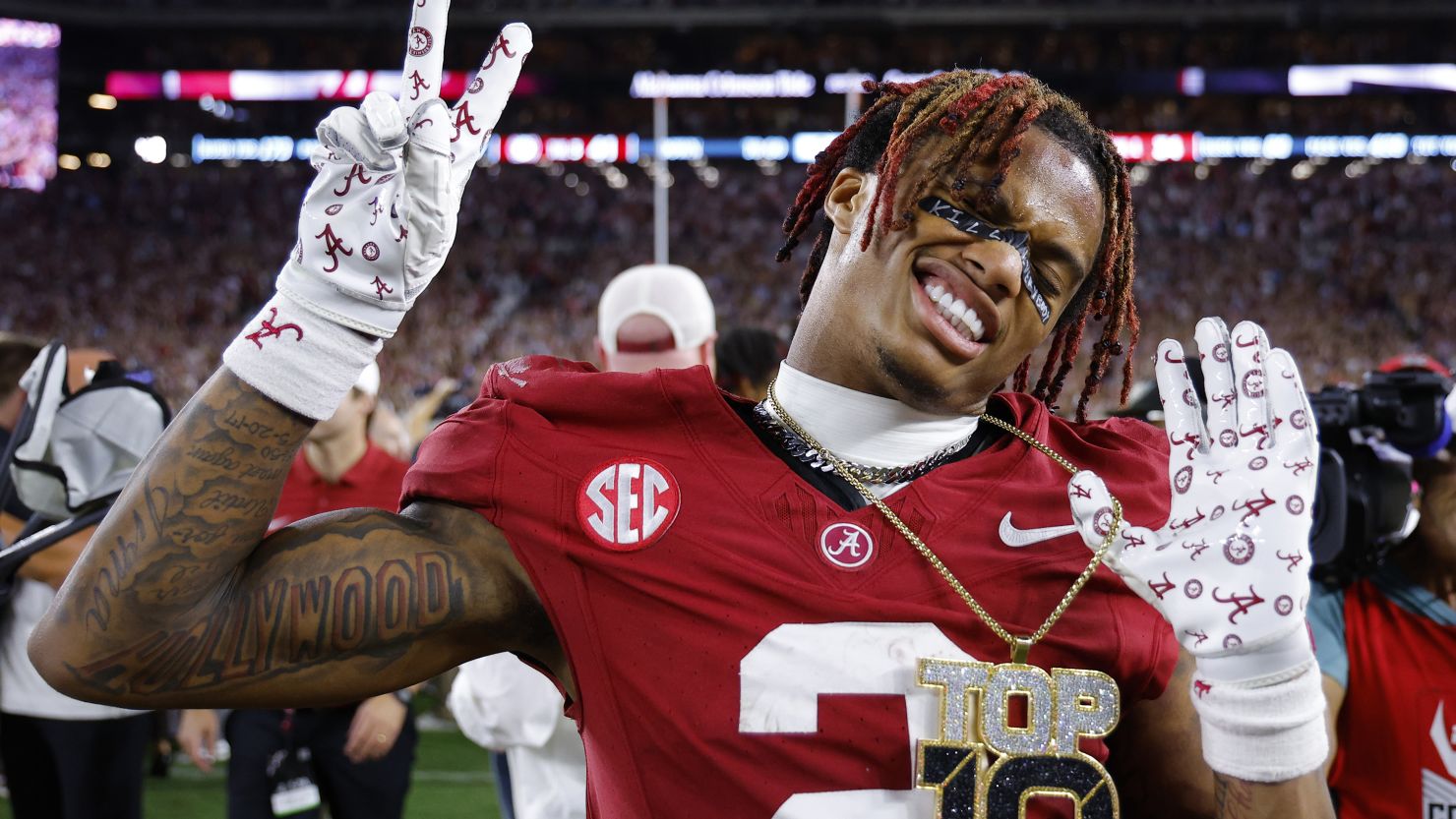
That question feels dramatic until you look at what happened on December 30, 2025. Alabama wide receiver Ryan Williams said he intends to return in 2026 and not enter the transfer portal. He said it publicly while speculation about his future with the program was swirling.
And if that didn’t hit you as a little gross, let me say it louder. Portal culture turned every good player into a hostage negotiation. The betrayal is that the sport keeps acting like this is normal, then looks at fans like we are the weird ones for feeling exhausted.
I’m not mad at Ryan Williams for speaking. I’m mad that he had to.
What Ryan Williams said about the Alabama transfer portal rumors
Here are the only facts that matter, because the rest is the noise machine doing what it does.
Ryan Williams said he intends to return to Alabama in 2026 and not enter the transfer portal. He spoke publicly amid speculation about his future with the program.
That’s it. That’s the whole story.
Except it’s not, because the real story is why that statement needed oxygen in the first place. Nobody should have to give a proof-of-life update just to exist on a roster. Nobody should have to reassure strangers on the internet that they are still doing the same thing they were doing yesterday.
Yet here we are.
If you’re searching Ryan Williams Alabama transfer portal, you’re probably looking for the twist. The shock. The secret. The hint of a breakup text. I get it, because that’s what college football trained us to do. It trained us to expect the rug pull.
Which brings me to the part that actually makes me feel betrayed as a fan.
Why Ryan Williams had to say anything at all
We’ve reached the point where staying is treated like an announcement.
Read that again, slowly. Staying is treated like a headline.
This is the loyalty test era. The sport keeps telling fans the same old bedtime story about tradition and family and brotherhood, then it builds an ecosystem where the default assumption is, “He’s probably leaving.” It turns every good season into an audition. Every big catch becomes a recruiting pitch for someone else. Every quiet week becomes suspicious.
And then, because the rumor economy is loud, the player gets dragged into the line of fire to clean it up. Not because the player did something wrong, but because the sport did something wrong. It built incentives that reward chaos, then pretends surprise when chaos shows up for work early.
Here’s the curiosity gap that matters: who benefits when “will he leave” becomes the default storyline?
Because it isn’t the player. It isn’t the fan. It isn’t the sport, not if you want the sport to feel real and not like a reality show with shoulder pads.
Somebody benefits. They always do.
The portal rumor economy is a casino, and fans are the chips
The villain is the portal rumor economy. Not the portal. Not the player. The economy.
The part built on whispers, speculation, and “everybody’s hearing” vibes that never have to cash a receipt. The part that turns uncertainty into content, then turns content into leverage.
That’s why a simple statement like “I’m returning” has to happen in public. The rumor economy does not respect private decisions. It only respects attention. And attention is the currency.
This is the betrayal in plain English. Fans are told the sport is sacred, but the ecosystem treats it like a rumor casino. It runs on adrenaline. It runs on fear. It runs on the most addictive sentence in modern college football: “Keep an eye on this.”
Everyone is yelling about loyalty. The receipt says the sport created a situation where loyalty has to be performed.
That’s the flip. When the default storyline is “he’s leaving,” the player is forced to prove a negative. The player has to disprove a rumor. The player has to spend emotional energy and public capital just to return to normal.
And once you see that pattern, you cannot unsee it.
College football tampering rumors, and why “proof” is optional
Now I’ll connect the dots between rumor blasts, leverage games, and why schools pretend tampering is a myth.
I’m not saying that’s what happened here. I’m saying this is the environment the sport built, and this is how the environment functions.
The rumor economy doesn’t need a smoking gun. It doesn’t need paperwork. It doesn’t need a quote. All it needs is believable friction. A little smoke. A little timing. A little “people are talking.”
And once that spark hits, everybody gets pulled into it. The fanbase starts scanning every post like it’s a clue. Every quiet moment becomes an omen. Every normal offseason becomes a panic spiral.
That’s why college football tampering rumors are so powerful even when nobody can “prove” anything. They are not designed to be proven. They are designed to be useful. Useful for stirring. Useful for pressure. Useful for leverage. Useful for moving the conversation.
If the rumor moves the conversation, it already did its job.
And here’s the second curiosity gap, the one the sport never wants to say out loud. What if the point isn’t to be right? What if the point is to force a reaction?
Because once you accept that possibility, a lot of this starts making sick sense.
The new loyalty test in college football is the real story
This is what happens when the rules invite chaos but punish transparency. Players get forced into public loyalty tests they never asked for.
That’s the bigger story, and it’s why this Ryan Williams moment matters beyond Alabama. The system keeps insisting everything is fine, then it acts like every roster spot is temporary. It treats “returning” like a special event. It trains fans to distrust stability. It makes players live inside a permanent rumor cloud.
Fans are tired of being told the sport is “tradition” while it acts like free agency with homework.
That’s why people share this stuff. Not because they love drama. Because they’re tired of being gaslit into pretending the drama is normal.
And the sneakiest part is how it rewires your brain as a fan. You stop enjoying the team you have because you’re constantly bracing for the team you might lose. You stop celebrating development because you’re waiting for the portal alert. You stop believing coaches when they say “culture,” because the culture gets tested every time a rumor account needs a spike.
If you like receipts with your takes, you know where to find me.
What should change next, and who needs to start acting like an adult
Here’s the part that should bother everyone, even the people who think this is just the new normal.
When a star has to publicly confirm he’s staying, the system already won. It forced the player to spend energy on the rumor instead of the season. It forced the fanbase to live inside uncertainty instead of excitement. It forced the conversation away from football and toward survival.
So what now?
I don’t want a sport where players are expected to “handle it” while the adults keep playing games behind the curtain. I don’t want a sport where silence is treated like betrayal, and a return has to be announced like a peace treaty.
The sport can keep pretending it hates chaos while quietly profiting from it. Or it can finally stop acting offended by the monster it built.
Should players shut up and let rumors run, or start naming the adults playing games?
ROLL WITH HAIL MARY MEDIA
Like this kind of chaos? Stay tapped in.
Follow us on X for live reactions, bad beats, and daily sports rants.
FOLLOW @HAILMARYMEDIA_ ON XNot done yet? CLICK HERE for more blogs.