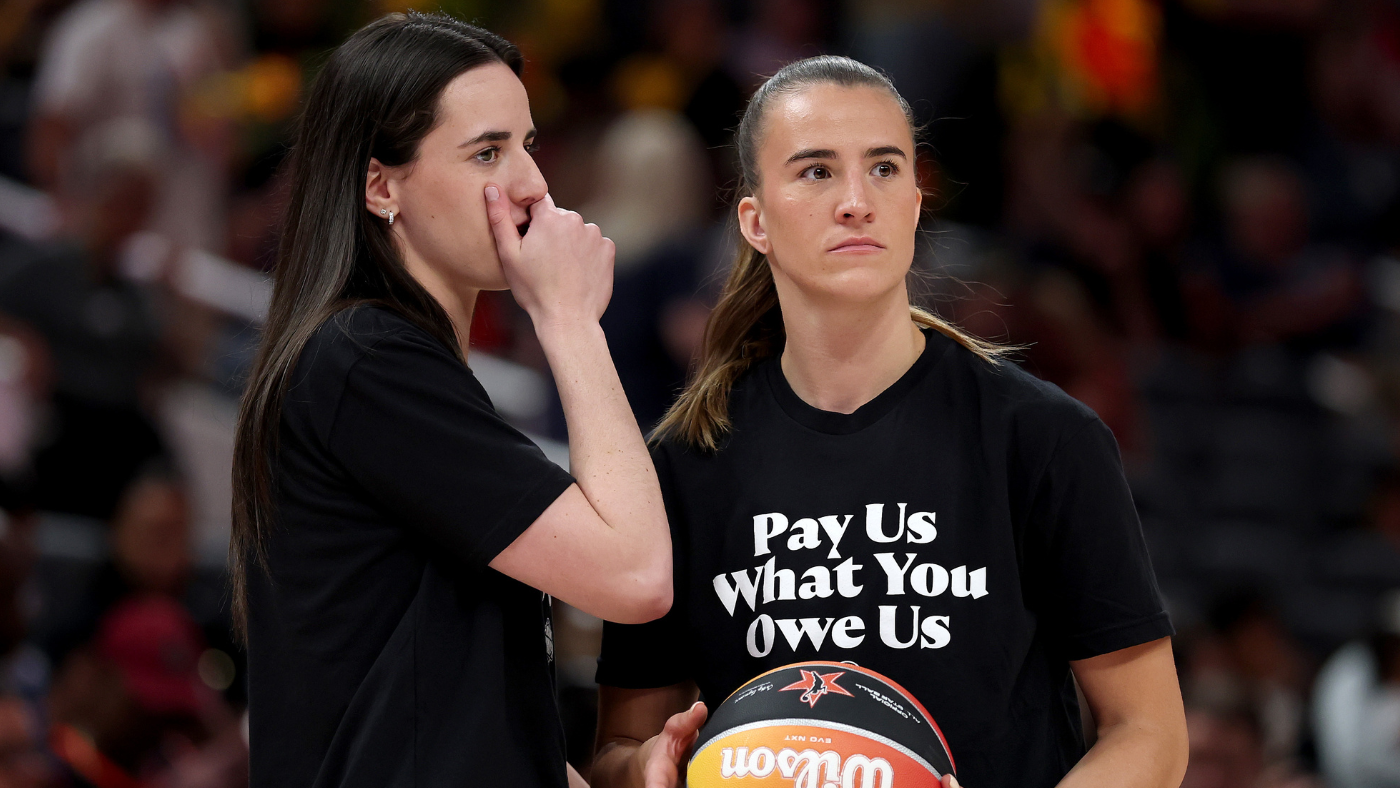

WNBA CBA expired and owners need to give players 30% of gross revenue now, or they’re begging for a shutdown that kills momentum. The league keeps screaming “growth,” but the second payroll comes up, everybody gets cheap.
And don’t get it twisted, I’m not doing the “both sides” thing here. If you’re an owner and you can’t make the math work while giving the talent 30% of the gross, that’s not a player problem. That’s a you problem. You don’t fix it by stalling, hiding behind PR lines, and hoping the fans get distracted.
WNBA CBA Expired: Stop Pretending “Ongoing” Means Peace
“Negotiations remain ongoing” is the cleanest corporate sentence ever invented. It’s the sports version of someone telling you “we’re fine” while they’re sleeping on the couch.
The deadline hit. It passed. And now the league wants you to believe everything’s under control because nobody’s publicly yelling on camera. That’s cute. What’s actually happening is the same cycle every league runs when money gets real: partnership talk turns into leverage talk, and leverage talk turns into threats when the calendar starts squeezing.
Here’s how you can tell this isn’t some minor disagreement. The players’ union flat-out accused the league of “undervaluing” them and “running out the clock.” That’s not a line you drop when things are going great. That’s a line you drop when you feel like the other side is trying to win by dragging you into panic mode.
And for fans, the panic mode is where seasons get messed with. Free agency gets sticky. Expansion planning gets delayed. The whole offseason turns into limbo. When people say “a work stoppage would be bad,” they’re right, but the owners keep acting like the players are supposed to care about that more than fairness.
30% of Gross Revenue Is the Bare Minimum, Not Some Wild Demand
I’ll say it plainly: 30% of gross is perfectly fair. It’s not extreme. It’s not greedy. It’s a compromise that still lets owners keep the bigger cut.
The union has been tied to a proposal where players get about 30% of gross revenue, and the gap between where things are and where they want to go is massive. Under the current structure, the 2025 WNBA team salary cap was about $1.5 million. The supermax was roughly $249K. Average salary was around $120K. Minimum salary was about $66K.
That’s not “top-tier pro league” pay. That’s “this better be your dream job because the pay sure isn’t acting like it” pay.
Now compare that to what owners get away with in other leagues. NBA players are guaranteed roughly 49% to 51% of basketball-related income. NFL players land in the 47% to 48.5% range depending on the season structure. NHL players sit at 50% of hockey-related revenue. You don’t have to love those leagues to understand the point: when a league is serious, the split is closer to half than it is to crumbs.
So when the WNBA players ask for 30%, they’re not even asking for the full “big-league” standard. They’re asking for a bridge between being treated like a cost and being treated like the product.
The WNBA Boom Numbers Make the “We Can’t Afford It” Line Sound Ridiculous
This is the part that drives me nuts. The WNBA’s growth isn’t theoretical anymore. It’s not “we think we’re trending upward.” It’s hard numbers.
In 2024, total attendance hit 2,353,735 fans, up 48% from the year before. The league averaged 9,807 fans per game. That’s not some tiny niche crowd. That’s people paying, showing up, and building habits.
On TV, the regular season across ESPN platforms averaged 1.19 million viewers, up 170%. The league also had major ratings spikes across other national windows, and the All-Star Game pulled 3.4 million viewers, which is a ridiculous number for where the WNBA used to be in the national conversation.
So spare me the sad violin. If you’re cashing the benefits of that kind of jump, you don’t get to turn around and act like paying the players fairly is going to sink the ship. You want fans to treat the league like it’s major. Fine. Then the league has to act major when it’s time to split the money.
And there’s more. The WNBA’s national media rights deal has been reported around $2.2 billion over 11 years, about $200 million a year, with distribution deals expanding heading into 2026. That’s the league planting its flag and saying, “We’re not playing around anymore.”
Cool. So why are we still talking about players maxing out under $250K in the year the league is supposed to be taking off?
Net Revenue Is Where Owners Hide the Ball
The league’s counter is basically this: “We’re offering players a big share of net revenue.” On paper, that sounds generous. In real life, net revenue is where owners can play games until you’re old and gray.
Gross is simple. Gross is the money coming in. Net is gross minus whatever the league decides counts as expenses, overhead, investments, and “necessary costs.” And I’m not even accusing anyone of breaking laws here. I’m saying the system is built so the people who control the books control the outcome.
That’s why the league offering something like 70% of net doesn’t move me. If you can define net, you can shrink net. If you can shrink net, you can brag about “70%” while still keeping the real money upstairs.
Players know that. Fans should know that too.
And look, I’m not blind. The league’s offer also includes big salary increases on paper. We’re talking max salaries going north of $1.3 million and rising toward $2 million over time, average salaries over $500K and rising, minimums over $250K in year one under that proposal.
That all sounds great, and honestly, it is great… if it’s real and sustainable in the open. But it’s tied to net-based math, and the union clearly doesn’t trust the structure. I don’t blame them. If you’re negotiating the biggest shift in league history, you don’t sign up for the version where you need permission to see the truth.
Why This Fight Matters More Than Any One Star
Some people want to reduce this to one rookie class, one wave of hype, one moment. That’s the lazy version. This is bigger than Caitlin Clark, Angel Reese, or any single name that moves jerseys.
This is about whether the WNBA is going to become a real “players share in growth” league, or whether it’s going to stay stuck in the old world where growth is a marketing slogan and payroll is treated like an enemy.
Because here’s the truth: the league finally has momentum with casual fans. You don’t protect casual fans with press releases. You protect them by keeping the product stable and the stars happy enough to keep showing up and selling the thing.
The players already authorized a strike if it comes to that, and it wasn’t close. That’s not bluff energy. That’s “we’re done being patted on the head” energy. And the league knows it, because a lockout doesn’t hit the same when players can go play elsewhere. A strike hits the league right in the face because you can’t run a pro league without the pros.
Also, the timing is brutal. Expansion teams like Toronto and Portland are coming. The offseason calendar is tight. Training camps aren’t far off in sports terms, and the season starts in May. Every week you waste turns this into a mess where even a deal feels rushed.
If owners care about the league they claim to be building, they stop playing chicken. They stop stalling. They stop trying to win the PR battle by throwing shiny salary projections at the public while keeping the engine under the hood.
The Simple Fix: Pay 30% of Gross and Stop Acting Like That’s Radical
Here’s my deal. If the owners want to be taken seriously, they need to put a clean number on the table and build trust.
Thirty percent of gross. Start there. Make it real. Make it transparent. Add escalators so when the league grows, the players automatically grow with it. Then hammer out the rest: better benefits, better travel standards, better family support, and a system that doesn’t treat players like they’re renting their careers year to year.
And if somebody wants to yell “the league loses money,” fine, let’s talk like adults. A lot of businesses invest before they profit. That’s normal. What isn’t normal is building your future on the backs of underpaid labor while asking fans to act like this is a premium product.
If the WNBA is truly hitting “unprecedented growth,” then the league has already answered its own question. The players are the reason you can sell that sentence. Pay them like it.
What I’m Watching Next and What Fans Should Be Loud About
I’m watching whether owners keep hiding behind “ongoing” and “sustainable” instead of putting a real split on the table. I’m watching whether this turns into a calendar war where the league tries to pressure players by threatening lost time.
And I’m watching the fans, because fans have more power than they think. Comment sections love to argue “pay them” versus “they should be grateful.” If you’re on the “grateful” side, ask yourself one question: grateful for what, exactly? Grateful for packing arenas, pulling million-viewer broadcasts, and still being told 30% is too much?
This is the moment. If the league wants to be big, it has to stop acting small. Pay up a fair split before this thing gets ugly, because if the season gets threatened during the WNBA’s biggest wave in decades, the blame isn’t going to land where owners want it to land.
So I’ll end it the way working people understand it: if you can’t pay the people doing the job, you don’t deserve the job.
ROLL WITH HAIL MARY MEDIA
Like this kind of chaos? Stay tapped in.
Follow us on X for live reactions, bad beats, and daily sports rants.
FOLLOW @HAILMARYMEDIA_ ON XNot done yet? CLICK HERE for more blogs.