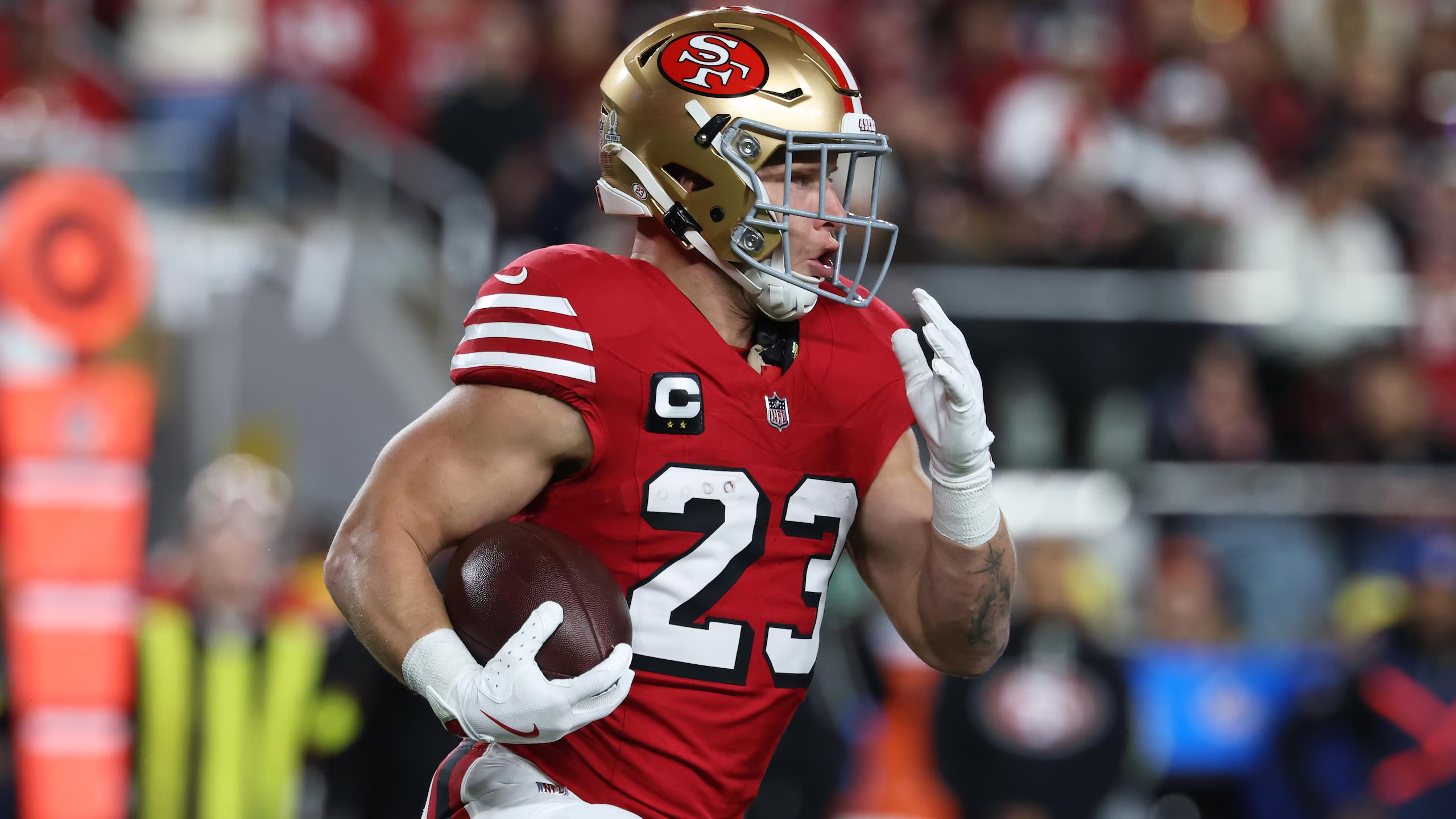
Christian McCaffrey missed a handful of August practices with tightness, and the sport went straight to the money.
The Christian McCaffrey contract theory did not need a leaked text, an agent quote, or a single anonymous source to spread. It needed a calendar. He stopped practicing in the same stretch of August that Bijan Robinson, Jahmyr Gibbs and Jonathan Taylor rewrote the running back market, and a large chunk of the football world decided on its own that the tightness was tactical.
It was not, and the people in position to know said so fast. Ian Rapoport reported the physical issue is real and specifically not a hold-in, with some offseason contract conversation that never turned into anything. Kyle Shanahan got asked directly and said the people assuming a contract play had it wrong, adding that McCaffrey would probably be out there if this were a game week.
Fine, the theory is dead. The speed at which everybody believed it is the part still sitting there.
Two summers ago McCaffrey signed a two-year extension and became the highest paid running back in football. Same coach, same building, same player, and he is fifth at the position today. Gibbs, Robinson, Taylor and Barkley all sit above him, and three of those contracts got signed inside the same week this month. Robinson owned the record for the biggest running back deal in league history until Gibbs took it two days later.. TWO DAYS.
What the Christian McCaffrey Contract Situation Actually Shows
The part that gets me is the structure underneath it. McCaffrey already collected his option bonus for this season, and most of the money left on the deal is not guaranteed. He is 30 years old at a position where front offices start pricing the exit early.. and thirty is not early.
What does a player in that spot actually have to work with? Almost nothing. Sitting out torches whatever guarantee language he has left. Threatening to leave is not a threat when the team is already budgeting for his replacement. He cannot get paid in March for a season he has not played. The only lever is availability, and availability looks identical from the outside whether the muscle is tight or the player is annoyed.
That is why the theory traveled the way it did. Everybody watching understood the incentive before they understood the injury.
When did a star last actually play out a contract? Played it to the end, hit the final game of the final season, walked into free agency on schedule and let the open market set the number. Robinson and Gibbs each had two years left on their rookie deals when they got paid. Taylor had already been extended once. That is how the whole thing runs now, top to bottom.
There is a version that fixes this, and it is the one nobody takes. If a player truly believes the market is going to pass him every single summer, the honest answer is a ONE-YEAR DEAL. Sign for a year, play, hit the market, take whatever that season made you worth, do it again. Reset the thing yourself, on purpose, every time.
Almost nobody does it, for a reason that is not complicated. A one-year deal parks the risk on the player. Tear something in October and the next contract never shows up. The long deal exists to shove that risk onto the team, and it does that job beautifully, which is how the sport ended up here: players kept the protection of the long contract and went hunting for the flexibility of the short one anyway, and the only tool that does that job is being unavailable.
McCaffrey did not reach for it. A five-practice absence just reads like a negotiating position by default now, because the last two Augusts taught everybody to read it that way.
He will practice, the season will start, and this one disappears by Week 1. The reflex stays, though, and somebody is signing a position-record contract this week that will look mid-tier in two summers.
Sign the long deal and you traded the upside for safety. Sign the one-year and you own the downside. Nobody gets both, and every August somebody tries to.