The NFL expansion cities conversation is one I’ve been waiting to have properly for a while, because the league has been flying to Melbourne and Rio and Madrid while entire American cities with millions of people sit there with nothing, and now a guy connected to Tom Brady and the Raiders just dropped that 34 teams is the number they’re working toward, so let’s actually do this right.
Mike Repole co-owns the UFL and does business with Brady through a company called NoBull, and Brady is a minority owner of the Las Vegas Raiders and the lead FOX analyst who broadcasts the NFL every Sunday, so when Repole tells reporters the NFL is “talking about two more expansion teams” that’s not some random guy floating a take from his couch, that’s someone wired into the actual operation saying something real, and 34 is the number he threw out.
The league has had 32 teams since 2002 when Houston paid $700 million to become the Texans and Goodell stood up and said the league was complete, and then spent the next 24 years flying everyone to Melbourne and Rio and Paris and Madrid and Munich and London three times in one year while cities like San Antonio and Portland sat there with millions of people and no team, nine international games in 2026 alone, Goodell wants 16 eventually, one per team per year, and this is not a league that thinks it’s done growing, it just keeps saying it is, and I’m tired of pretending we don’t see what’s happening here.
So who actually deserves in when they finally pull the trigger? Not who tweets the loudest, not vibes, here’s what the research actually shows about which NFL expansion cities have a real case.
The NFL Expansion Cities That Deserve a Shot: Starting With the One the League Has No Answer For
The five NFL expansion cities with the strongest factual case are San Antonio, Portland, San Diego, St. Louis, and Oklahoma City, and what they all have in common is massive underserved populations, some combination of existing infrastructure or real political will to build it, proven fanbases, and a league that has been looking the other way for reasons that mostly come down to money and owners protecting territory, and every single one of them has been waiting long enough that the excuses are starting to sound embarrassing.
San Antonio is where I want to start because it is the most obvious case in American professional sports and the fact that we’re still having this conversation in 2026 is genuinely wild when you sit with what’s there, a metro of five million people in the Austin-San Antonio corridor right now projected to hit 8.3 million, the sixth-largest city in America, the Alamodome that seats 64,000 and hosted Saints games when Katrina hit in 2005 and averaged nearly 61,000 doing it, and we know that building works because we’ve watched it work, and on top of all that the Raiders sat across an actual table from San Antonio in 2014 and had real conversations about moving there before choosing Las Vegas, which means one of the NFL’s own franchises decided this market was worth a serious meeting and then still walked, which is the clearest possible signal that the market passes the smell test and something else is getting in the way…
San Antonio Should Already Have a Team and Jerry Jones Is the Only Reason It Doesn’t
…and that something else is Jerry Jones, who has spent decades treating the state of Texas like personal property and who is not going to let a new franchise move into his territory without using every vote he has in that ownership group to stop it, and nobody in the media wants to say it out loud because he’s Jerry Jones and this is as much his league as Goodell’s, but that is the real obstacle in San Antonio and it has been for years while everyone politely pretends it’s about media markets and corporate infrastructure, which are real factors but not the actual reason five million people in that megaregion headed to eight million are still waiting.
The only NFL teams within 200 miles are the Cowboys and the Texans and Jerry Jones would like to keep it exactly that way, which means San Antonio might be the strongest market on this list and the one least likely to actually get a team anytime soon, and that’s a league problem the league is completely comfortable ignoring, so let’s talk about the cities where the path is a little cleaner, starting with one that baffles me every time I look at it.
Portland Is the NFL Expansion City Everyone Keeps Sleeping On and the Numbers Don’t Support That
Portland has 2.5 million people in the metro, one team from the four major professional sports leagues, and the closest NFL franchise three hours away in Seattle, which means the entire Pacific Northwest is being served by one football team and we’ve all just decided that’s fine, and I don’t understand why, because when you actually look at what’s there the case is a lot stronger than the people who put it at the bottom of every expansion list are willing to admit.
The Trail Blazers are the only big-four team in the city and the Timbers and Thorns have built some of the most genuinely passionate fanbases in American professional sports, people who actually show up and fill stadiums consistently, which is something a lot of established NFL markets with decades of history can’t say on a bad week, and Seattle fans are not naturally Portland fans, these are people who have had zero reason to care about the Seahawks their entire lives and most of them don’t, so the idea that Portland is being served by the Pacific Northwest’s existing NFL presence is something the league tells itself to avoid having the real conversation.
Oregon’s governor signed an $800 million stadium construction bill in June 2025, for baseball, but when a state government writes that check it tells you something real about what they’re willing to spend on professional sports infrastructure, and that matters when the NFL is in a room deciding who’s serious, and Portland is serious even if the ownership question isn’t sorted and the football stadium doesn’t exist yet and the state is chasing baseball first, because those are all solvable problems in a market the league has completely left unclaimed, and at some point leaving 2.5 million people in the largest one-sport major metro in America becomes a choice you have to defend publicly, which brings me to the city where the NFL doesn’t just have to defend the absence of a team but actually has to defend how the team left in the first place.
San Diego Has a Claim the NFL Built With Its Own Hands and Has Been Pretending Doesn’t Exist Ever Since
Dean Spanos moved the Chargers to Los Angeles in 2017 and nine years later they share SoFi Stadium with the Rams and have spent nearly a decade being the less popular team in their own building while 3.3 million people in San Diego who supported professional football for 56 years sit there with nothing, and I want someone to explain to me how that’s not the NFL’s problem to fix because from where I’m sitting Dean Spanos drove the car into the ditch and left and the league handed him the keys and watched it happen.
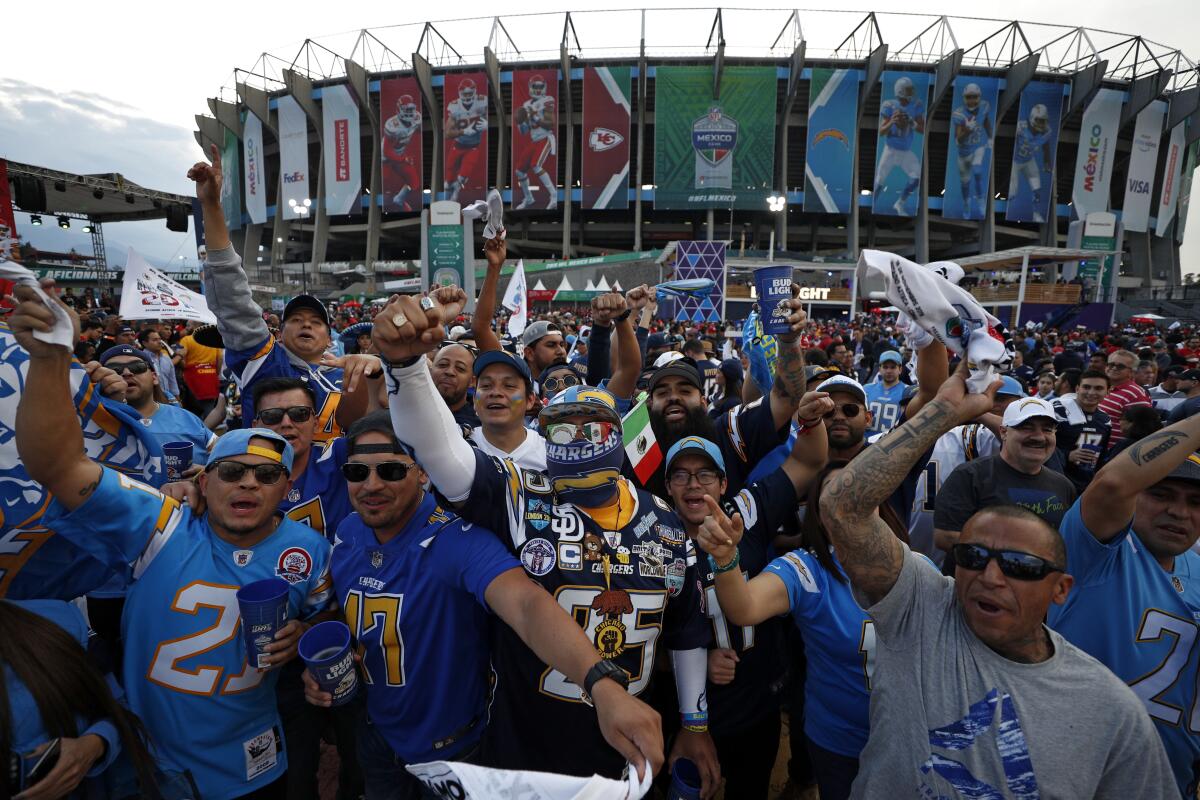
The Chargers never built a real fanbase in LA, the city made its feelings about the Rams very clear very fast, and the experiment of taking a team from a market where it worked and dropping it into a market where it was always going to be second choice has produced exactly the results you’d expect for nine straight years, while San Diego sits on the actual Mexican border in a region where the NFL is actively chasing cross-cultural market growth through a multi-year Mexico City deal and a Global Markets Program where ten teams already hold marketing rights in Mexico, and a San Diego franchise would deliver that market naturally without anyone getting on a plane, which is a thing the league is clearly paying for elsewhere while ignoring the city where it already exists.
No public ownership group, Snapdragon Stadium seats 35,000 which does not work for the NFL, construction in Southern California costs enough that a new stadium is a multi-billion dollar conversation before anyone says hello, those are real obstacles and the NFL will absolutely hide behind them, and they built every single one of them when they let Spanos leave, which is worth remembering every time someone in the league office acts like San Diego’s situation has nothing to do with them.
St. Louis Has a $790 Million Receipt That Says the NFL Isn’t Done Owing Them an Answer
The league approved the Rams’ relocation after the 2015 season, St. Louis filed a lawsuit saying the NFL violated its own relocation guidelines doing it, and the NFL settled for $790 million in 2021 with a settlement that explicitly did not include any promise of a future franchise, which is the league’s way of writing a very large check and hoping the conversation goes away, and it hasn’t, and it shouldn’t.
Stan Kroenke’s relocation application said St. Louis couldn’t support baseball, hockey, and football at the same time, and then the Blues won the Stanley Cup in 2019 and the Cardinals kept selling out Busch Stadium the way they have for over a century, and the market-can’t-support-it argument collapsed almost immediately and everyone in that league office knew it when they were writing the check and signed it anyway, and left a fanbase that showed up for decades holding $790 million and no promises while the Rams played in a billion-dollar stadium in Los Angeles, and St. Louis is the only American city that has lost two NFL teams, a sentence that should make everyone in that league office deeply uncomfortable every single time it comes up in an expansion conversation.
The stadium situation hasn’t been sorted since the settlement and the population has been trending the wrong direction for years, those are real factors and the league will use them, but the NFL left twice, settled a lawsuit they were lucky not to lose at trial, and told a city full of real fans that a check with no promises attached is all they’re getting, and that’s going to follow this league into every expansion conversation that includes St. Louis until they actually do something about it, and right now we’re just watching them run out the clock on it the same way they’ve run out the clock on every uncomfortable conversation they don’t want to have, which brings me to the last city on this list and honestly the one with the most momentum going into whatever this expansion process actually looks like.
Oklahoma City Is Making a Case the NFL Is Going to Run Out of Excuses to Ignore
The Thunder won the NBA championship last year and Oklahoma City had already voted to build a $900 million arena before that happened, which tells you everything about how this city operates, because you don’t commit $900 million to a new arena before you have a championship unless you believe in what you’re building and want to keep building it, and that’s exactly the energy the NFL should be looking for in an expansion market but somehow keeps not finding when OKC comes up in the conversation.
The UFL is coming to OKC in 2028 and the league’s own president called it “one of the most glaring vacancies on the professional football map” when announcing the expansion team, which is the spring football league with ownership connections running into the same network as the NFL saying out loud that this market is being underserved and they know it, and Oklahoma breathes football in a way that most NFL cities don’t come close to matching, OU and OSU and Friday night lights in every town in the state, this is not a market that needs to be sold on caring about the sport, the sport is already there running deeper than it does in cities that have had NFL franchises for forty years.
The population is the real problem, just under 1.5 million in the metro, and Green Bay is the NFL’s smallest market operating as a community-owned nonprofit in a situation that is never happening again in professional sports, so a new franchise needs real revenue and OKC’s size gets used against it in every conversation, but what this city has is a two-year runway to prove something real, the UFL arrives in 2028, the new arena opens in 2028, and if Oklahoma City shows up for professional football the way it has shown up for everything else it’s been given, the league is going to have a very hard time explaining why it’s still not there.
One more city worth mentioning before I’m done because it keeps getting dismissed too quickly: London, where the NFL has played more regular-season games than anywhere outside the United States, where Goodell wants 16 international games a season eventually and is actively building toward it, where the fan interest is documented and real and has been building for years, and the only reason a permanent franchise isn’t there yet is the logistics of travel schedules and time zones and roster management that the league hasn’t fully solved, which they will solve eventually, it’s just not in my top five right now because the domestic cities all have cleaner paths and frankly more compelling cases for why the league owes them a shot.
The NFL gets to 34 teams when enough owners vote yes and the money makes sense, and there’s a real chance they get this right and an equally real chance they pick the two cities with the richest ownership groups lined up regardless of which markets actually deserve it, because we’ve watched this league operate long enough to know exactly how Goodell prioritizes things when the cameras aren’t on, and five million people in the San Antonio megaregion have been waiting longer than any market on this list for someone in that building to finally notice them while Jerry Jones protects his territory and the league calls it a media market problem.
The math always wins eventually.