I’m so tired of hearing, “Well, every owner is a billionaire, tell yours to spend like the Dodgers.” Okay.. HOW? Because this Dodgers competitive advantage goes WAY beyond one billionaire simply caring more than another. The Dodgers are expected to shield more than $1.3 BILLION from revenue sharing over the 25-year life of their local-TV deal, and that same TV money has reportedly helped back around $1.5 billion in debt. Then you add more than $1 billion in deferred player payments on top of it. At what point can we stop pretending every MLB team has access to the same financial playbook and some owners just refuse to open it?
And before anybody starts with me, YES, there are cheap owners. I’m a Pirates fan. You really think I need a lecture about that? Bob Nutting should spend more money, and if MLB ever puts in a salary cap without also putting in a serious salary floor, I’ll hate that too because all you’ve done is make life easier for guys like him. But I can believe Bob Nutting is cheap while also believing the Dodgers have financial advantages Pittsburgh, Cincinnati, Milwaukee and a bunch of other markets could never realistically recreate. Those two thoughts can exist at the same time.
The Dodgers Competitive Advantage Is Something Most Teams Can’t Just Copy
This is what gets lost whenever somebody says, “Just spend like Los Angeles.” The Dodgers’ local-TV deal was worth $8.35 billion over 25 years. That isn’t a little extra spending money.. that is an entirely different financial universe. And because of the way the revenue-sharing treatment was established around the franchise’s bankruptcy situation, more than $1.3 billion is expected to stay out of revenue sharing over the life of the agreement. So what exactly is another owner supposed to copy here? Should Pittsburgh just become Los Angeles? Should Milwaukee find a few million extra people and an $8 billion TV contract somewhere? Maybe Cincinnati forgot to check behind the couch cushions.
That’s why “every owner is rich” has always been too lazy of an answer for me. Of course they’re rich. You don’t accidentally buy a Major League Baseball team with the money you saved clipping coupons. But the personal net worth of an owner and the annual economics of the franchise are not the same thing. One team having access to hundreds of millions in local-TV revenue while another team operates in a completely different market matters, and when the richer team can keep an unusually large chunk of that advantage outside the revenue-sharing system, it matters even MORE.
Then there’s another layer to this that makes the whole thing even crazier. The Dodgers didn’t just have this gigantic guaranteed television revenue stream sitting there. That money could be used as an asset in other financial arrangements too, with around $1.5 billion in debt reportedly underwritten with local-TV money. Think about what that means from a competitive standpoint. The advantage isn’t only, “We get a bigger TV check than you.” The size and certainty of that check can create financial flexibility elsewhere too. That’s a hell of a lot different than telling another owner to simply grow a pair and sign a free agent.
And none of this means the Dodgers are doing something wrong by using it. If the Pirates somehow had this exact setup tomorrow, I would be furious if they DIDN’T take advantage of every piece of it. That’s what good organizations do. They find the edge and use the hell out of it. My issue isn’t that Los Angeles found the edge.. my issue is MLB allowing an edge this massive to exist and then acting surprised when fans start asking whether everybody is really playing on the same field.
Then You Throw The Deferred Contracts On Top
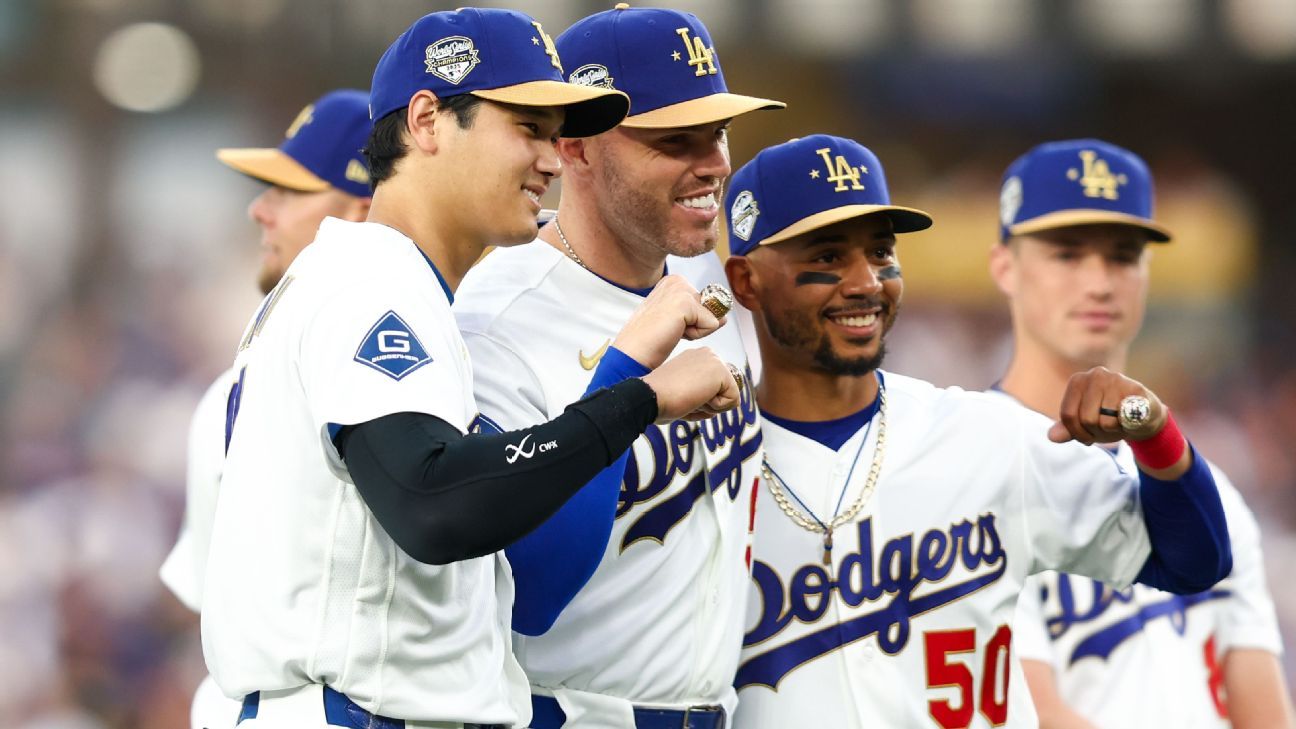
This is where the whole thing starts feeling ridiculous. The Dodgers have more than $1 billion in deferred player obligations, including the $680 million Shohei Ohtani pushed into the future. I already know what comes next: “But deferrals are legal.”
I KNOW.
That doesn’t make the system good. It just means the Dodgers are smart enough to use the system MLB gave them. If you have enormous guaranteed revenue, a roster stars want to join, and rules that allow you to push massive amounts of money into future years, why wouldn’t you do it? I don’t expect Andrew Friedman to wake up one morning and say, “You know what, I think we’ve had enough advantages. Let’s make this harder on ourselves.”
That’s MLB’s responsibility. The Dodgers’ responsibility is to win.
And that’s why I don’t buy the idea that this is simply about the Dodgers being better run than everybody else. They ARE better run than plenty of teams. Let them draft better. Let them develop better. Let them scout better, trade better, hire smarter people and find players everybody else missed. If they beat my team because they’re better at BASEBALL, fine. That’s sports.
But there’s a difference between Andrew Friedman running circles around your front office and Los Angeles starting with a financial setup your city could never duplicate. One is a baseball advantage you earned. The other is a structural advantage baked into the economics of the league.
MLB Needs A Salary Cap AND A Salary Floor
So fix both sides of it. I don’t want a salary cap by itself because then the Dodgers get pulled down while the cheapest owners in baseball sit there laughing their asses off. If you cap the top and do NOTHING to the bottom, congratulations.. you just made cheap ownership more profitable.
Put in a salary floor too. A REAL one.
If you want the privilege of owning one of only 30 MLB teams, there should be a minimum amount you’re required to invest in actually trying to win baseball games. No more sitting near the bottom of payroll, collecting shared revenue and telling fans to wait through rebuild number 47. If smaller-market teams need stronger revenue sharing to realistically hit that floor, then change revenue sharing too. Give them the resources and then FORCE them to use those resources on the product.
That’s the part of this I don’t understand why people treat like some impossible choice. Why do we have to choose between being mad at the Dodgers for having too much financial power and being mad at cheap owners for spending too little? I’m mad at BOTH ends of it. Bring the top down, bring the bottom up, and let the space in between be decided by who is actually better at running a baseball organization.
I don’t want 30 identical payrolls, and I definitely don’t want some fake version of parity where everybody finishes 81-81 and gets a participation trophy. Big markets are always going to make more money. Smart teams are always going to find advantages. Good. That’s part of sports. I just want those advantages small enough that a well-run team in Pittsburgh or Milwaukee can realistically overcome them without needing an $8.35 billion television contract to fall out of the sky first.
Because right now, when you stack the TV deal, the revenue-sharing protection, the financial flexibility that TV money creates and more than $1 billion in deferred player payments together, “their billionaire just cares more” doesn’t come close to explaining it.
That’s BS.
Put in the cap. Put in the floor. Make revenue sharing actually help create competitive balance, close some of the deferred-contract insanity, and make EVERY owner prove they’re serious about winning.
Then if the Dodgers are still better than everybody else because they’re smarter at baseball.. tip your cap and go beat them.